
Nothing is going to happen on the colony front unless and until we have spacecraft that can take us there. Do we have those now, and if not, how far away are they?
I’m going to focus on SpaceX hardware because they are the only people who have built at least partly reusable ships that are commercially successful. China is right behind, will be there very soon, but they’re pretty secretive about their hardware, whereas SpaceX is very open. (Note: This morning (Feb 11, 2026) China televised the latest test of its Long March 10, which looks disturbingly like a Falcon Heavy but has a hydrogen/oxygen third stage. The Chinese will steal anything 🙂 It was a completely successful test with a simulated landing and hover-catch, just like Starship. I repeat, the Chinese will steal anything 🙂 That machine can take them to the moon. It isn’t a coincidence that Elon announced last week that his next goal has been changed to the moon rather than Mars. The US is, finally, very nervous about the Chinese space program.)
Could SpaceX service a colony in Geostationary Earth Orbit with it’s existing hardware? Yes. Possibly slowly and painfully, and possibly needing some modifications, but not much.
A Falcon 9 can put 18,500 kilos into LEO, and a fully loaded Crew Dragon weighs 12,500 kilos, so it would show up with 6 tonnes of fuel left in the tank. Two refuelings (we need to figure out how to refuel in space, and we will. They’ve already tested it with Starship, I believe) of 18.5 tonnes each would bring fuel mass back up to 43 tonnes, which would take Crew Dragon (WITH THE FALCON 9 STILL ATTACHED) to our little colony with 7.5 tonnes of fuel in reserve, plus a fully-fueled Crew Dragon.
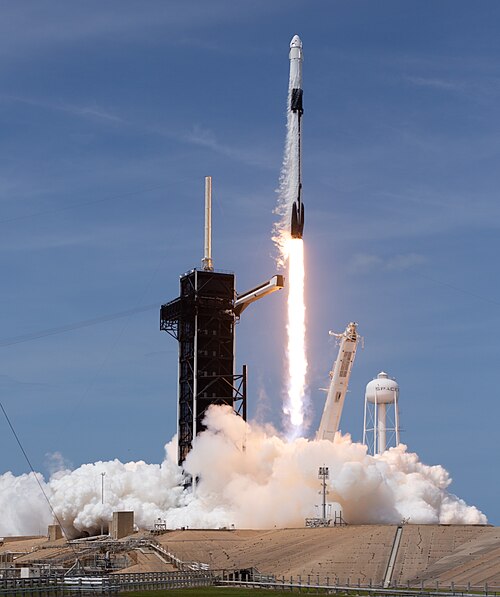
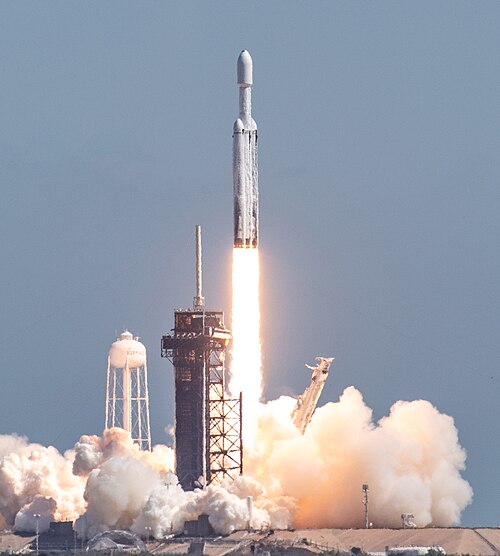
A Falcon Heavy can lift 57 tonnes to LEO by recovering the side boosters and expending the center core. In this case, the payload would be the fully loaded Crew Dragon plus 44.5 tonnes of remaining fuel. That would eliminate the need for refueling, as the second stage could take a loaded Crew Dragon to the colony with 6 tonnes of fuel in reserve.
There are currently 5 Crew Dragons and 5 Cargo Dragons (no plans to build more), designed and constructed to service the International Space Station. The ISS program is scheduled for termination in the near future, leaving them without meaningful duties. And as we have just seen, they can be used not only to service the colony, but also to be used as crew boats to service the satellites.
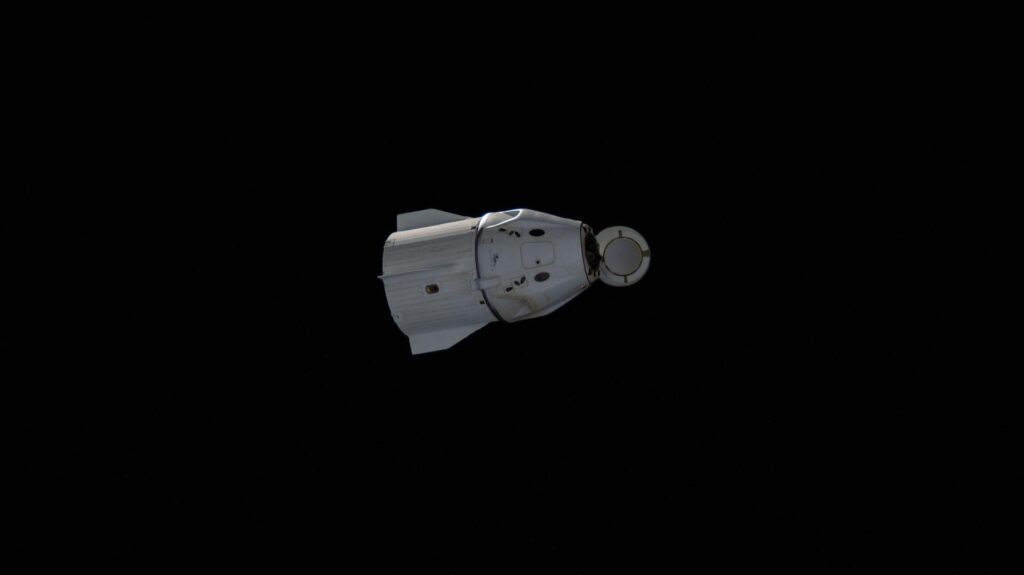
Crew Dragon with the unpressurized trunk attached and the airlock cover open.
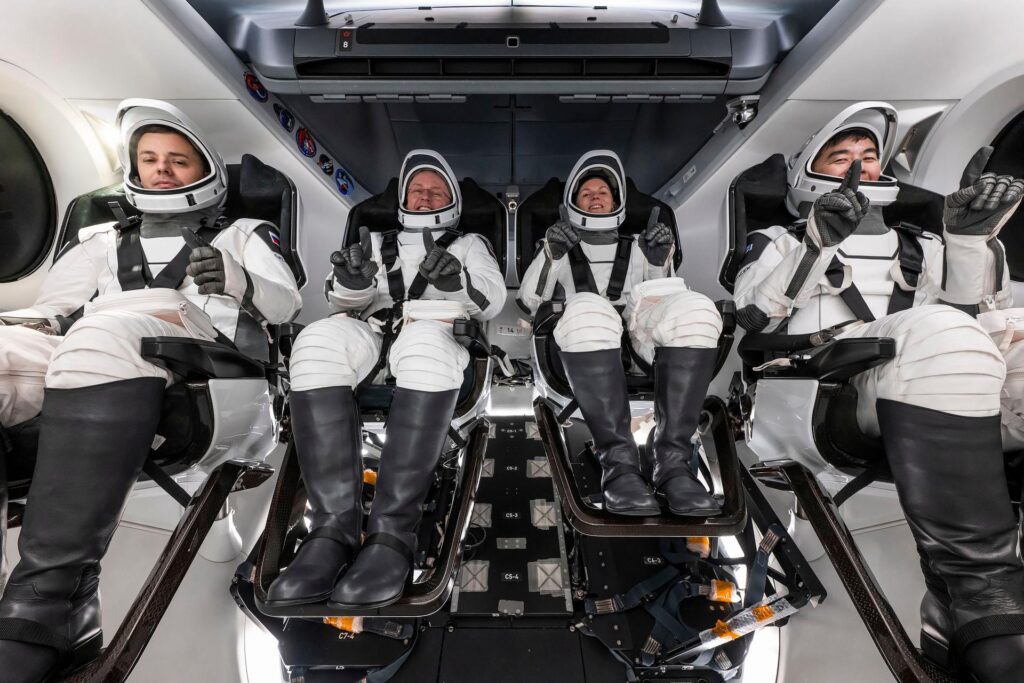
Plenty of room for four people, and will keep them fed, watered, and comfy for up to ten days.
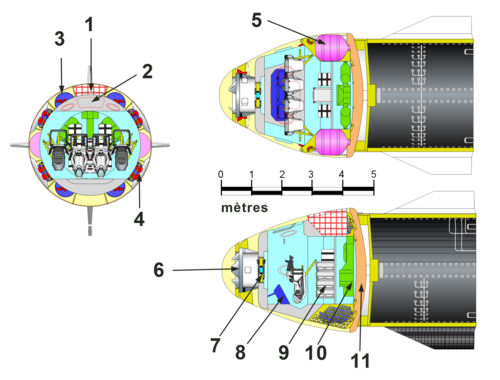
The unpressurized trunk holds 37 cubic meters, and will comfortably hold a roll-out solar array or other large objects.
To paraphrase Star Wars, are these the ships we’re looking for? Probably not, but they’re the ones we have, and they’ll get the job done just fine!
So, a silly question, but could that hardware go to the moon? Well. Yes, actually. That Falcon Heavy could put a fully-loaded Crew Dragon from Earth Surface to Low Moon Orbit (100 km) with 2.5 tonnes of fuel remaining! Who knew?
There are minor problems, of course. Orbiting is not landing. That takes another 1.73 kps of delta-vee, and Crew Dragon can only muster 650 meters per second. You COULD add 6 tonnes of fuel into a tank in the trunk, which would allow you to land. And there you would be. Out of fuel, no way home. I’m sure there’s a way to turn this into some kind of mission, with shuttles to Low Moon Orbit, refuelers, landers, and god knows what else, but it’s of no utility to us colony-people. We need a bigger gun.
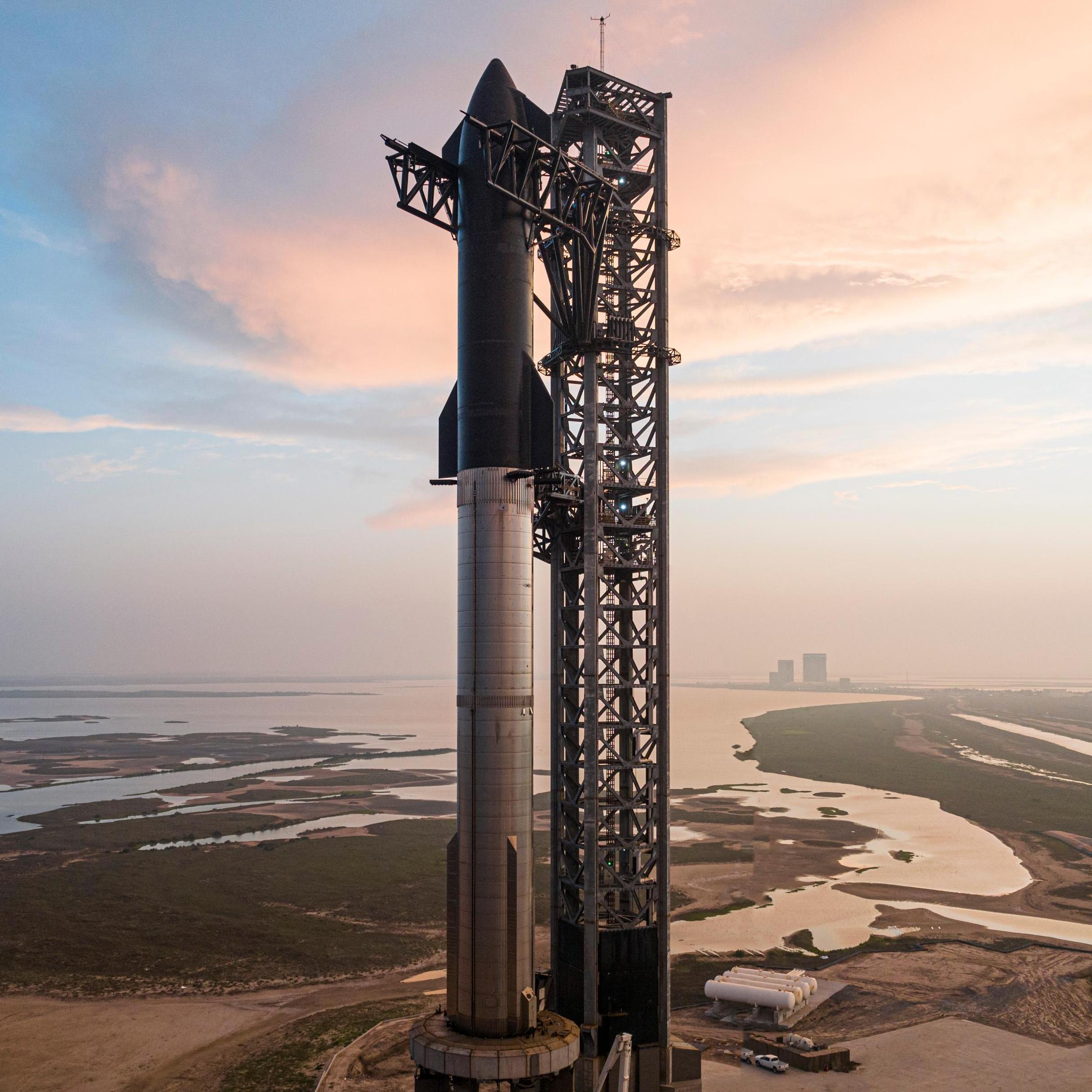
A bigger gun.
OK, this is seriously a bigger gun. Elon Musk figured out a long time ago that he needed a BFR (his term, I’ll let you figure out what it stands for) if we were going to turn an off-planet colony into a reality. That morphed into Starship, with Superheavy as a booster, and a big-ass combination of ships they definitely are.
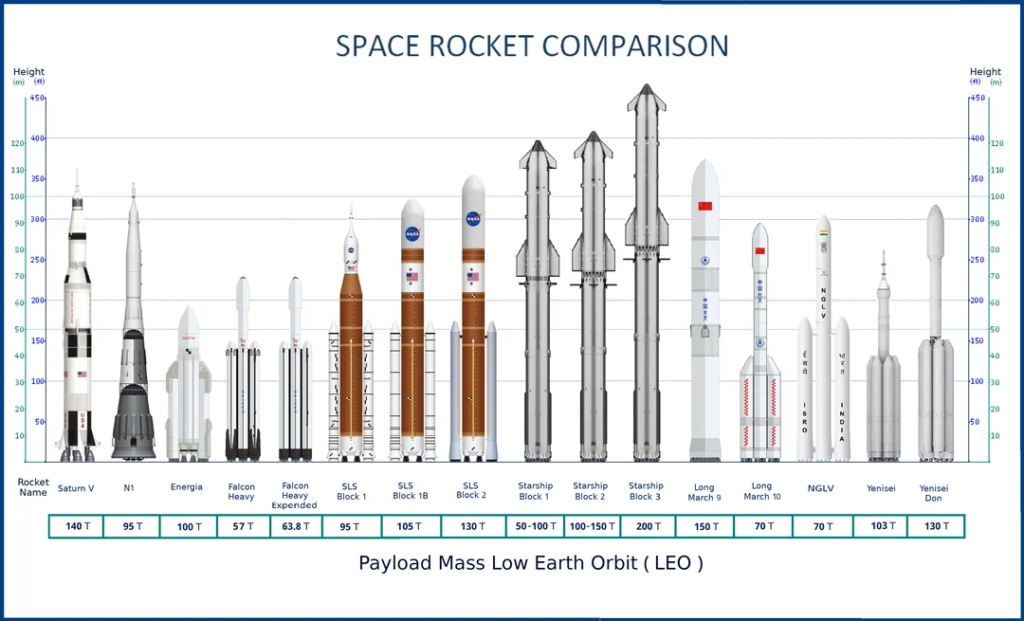
200 tonnes to LEO. Can they do it? Maybe.
You’ll immediately notice that ‘one of these things is not like the others’. That’s because Starship, the thingy on the top with the little wings, is part of the payload rather than a throw-away booster. It’s a real spaceship, intended to be multi-purpose. Variants could haul liquids like rocket fuel (a tanker), cargo, or people. He thinks the people-hauler could transport 100 people on the 7-month journey to Mars in ‘comfort’ (your experience may vary). Does this thing exist beyond a napkin or Elon’s fevered imagination? Yes, it does!
SpaceX is trying to accomplish several truly world-shaking breakthroughs simultaneously, some of which are not immediately obvious. That’s why it’s so confusing to follow events in popular media; most journalists aren’t comfortable with STEM (which is why they’re journalists), and they don’t understand the implications of what they see when it comes to rocketry. But I digress. What are those earth-shaking developments?
Firstly, they are driving down the cost-per-kilo of mass to Low Earth Orbit. The Space Shuttle was envisioned as a reusablevehicle that could drive launch cost down from $22,000 per kilo to $2,200 per kilo. By the time the government finished mauling it, launch cost was $66,000 per kilo! In other words, no matter what anyone tells you, the Space Shuttle program was an abject failure. Cool. Nifty. Failure. After a few decades of NASA and its cost-plus contractors milling around like sheep in a pen, SpaceX emerged on the scene, and within a decade, they have reduced launch cost to $3,000/kilo (Falcon 9) and then $1,500/kilo (Falcon Heavy). These are partly reusable vehicles; the booster generally lands on a drone-ship downrange after lifting the second stage to 80 km and Mach 6, is towed back to harbor, and quickly refurbished for a future flight. That allows SpaceX to launch ca. 100 flights per year with the same 20 boosters! The second stage is destroyed by ‘de-orbiting’ it, and it is designed to burn up completely in the atmosphere.
They hope to drive the cost to $500/kilo with Starship (possibly significantly lower) by making the entire vehicle quickly reusable. Is that possible? Maybe. It’s probably the hardest thing there is, right on the bleeding edge of physical limits. If anyone can get it done, it’s Elon, but personally, I’m not convinced. What people don’t realize, however, is that if SpaceX never made a Starship capable of rapid re-use, it would still be a resounding success. The booster is already flight-proven (1 successful tower-catch and several full-hovers on the ocean surface), and Starship has successfully reached orbit at least three times (they keep the speed a few meters below orbital velocity during testing so that if it does not relight, it will come down by itself in the Indian Ocean). If Starship couldn’t return to be reused, launch cost would still likely be reduced to $750-1,000/kilo, and the Starship wouldn’t have to be ‘de-orbited’. It could be used for dozens of purposes.
The second impossible thing they are doing is building a high-thrust, high-efficiency rocket engine that approaches theoretical physical limits, and which can be built on an assembly line. The lighter the engine, the more thrust it has, the bigger the payload to orbit. The engine runs on methane/oxygen (methalox) and is called ‘full-flow staged combustion’, which means that it uses all of the fuel (most engines don’t) at the highest efficiencies (most engines don’t), and it runs at insane pressures (4800 psi for Raptor 3), which delivers a thrust-to-weight ratio of >180. So a 1-tonne engine can lift 180 tonnes, and there are 33 engines. Eeek.
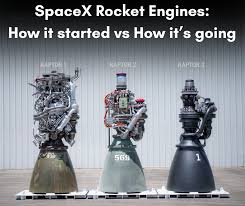
The evolution of Raptor engines, Raptor 1 on the left and Raptor 3 on the right.
The third impossible thing they are doing is building a factory, with assembly lines, to build spacecraft at scale. No one had even thought about doing this before. All rockets and spacecraft are currently ‘carriage-built’; the Space Launch System rocket has a current build rate of 4-5 years AT BEST. SpaceX is aiming for an initial build rate of 1 per month, moving to 1 per week, with 1 per day as a stretch goal. This has an enormous impact on volume to orbit because of its effect on launch cadence. If they can build 12 non-reusable Starships per year, those ships can put roughly 1.5 million kilos into orbit. If those ships were reusable on a 30-day turnaround, they could put 10 million kilos into orbit. And every year, there would be more ships.
It makes us colonists smile. Thanks for reading along!