
That seemed like a pretty straightforward question until I tried to answer it.
We have tons of work camps in Canada. When travel times are too long for daily commutes to make economic sense, employers establish places for their workers to live for limited time periods, such as 2 weeks working/ 2 weeks off. Over time, these camps have become pretty cushy, with all the comforts of home. So is that a colony? I don’t think so, because everyone actually has a home somewhere else, and they just commute to the camp for short periods to work.
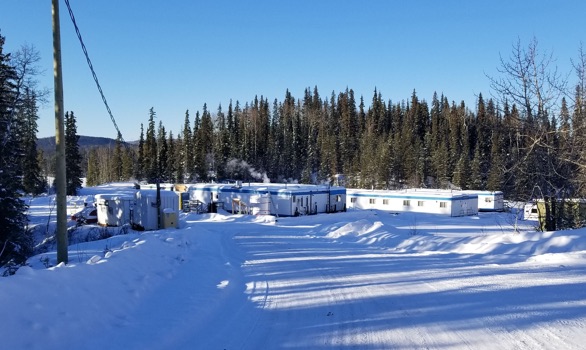
But then let’s say that the camp has road access and several workers drag their 5th-wheel trailers up, set them up on the edge of the parking lot, and live in them rather than the camp. They still commute, but they have their own private spaces.
A gas station owner in the nearest town, eight hours south, sets up a gas station across the road with a limited supply of snacks and supplies for travellers. He’s reconciled to losing a bit of money at first, but business will pick up and he has the location locked up. Soon, a mechanic from the camp lets the owner know that he’s available to do minor car repairs when he’s not working.
Then a jade miner shows up and sets up a half-dozen Park Model trailers to house her workforce right across the road. She only needs four right now, but she’s going to set the other two up as AirBnBs for travellers. The gas station owner expands his snack booth into a proper grocery store. And one of the workers at the camp decides to open up a little cafe, and stops commuting back to town because business from the travellers, the jade people, and the camp people is pretty good. The highway maintenance contractor brings two trailers up for their employees and families, and sets up buildings for their equipment plus a maintenance facility.
Then the jade miner starts cutting and polishing her jade on-site, and decides to set up a museum and showroom for the increasing traffic on the road, so she brings in some people to build her a few log buildings, and they need someplace to stay. And they discover that there’s a steady market for new buildings, so they set up shop, build homes for themselves, and bring their families up.
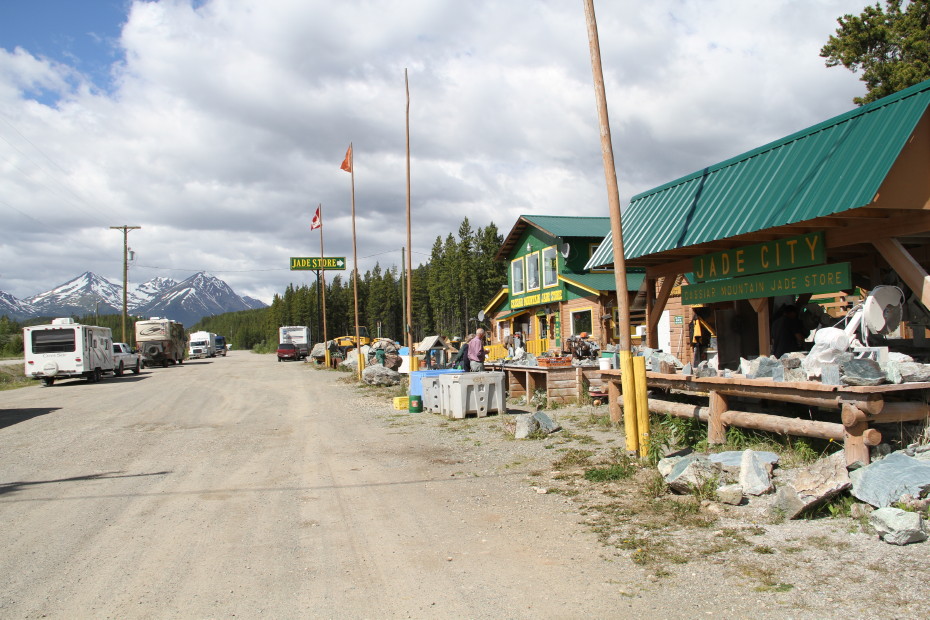
The little cafe gets bigger, and now sports a patio and serves beer. And the volunteer teacher for all the kids that have shown up is recommending that they apply to the government for some help.
So is THAT a colony? Yeah, probably. It’s certainly an emerging community. And while every situation will be different, some variation of this will take place in our off-planet colonies as well. The successful ones generally share a combination of private ownership, full-time occupation, and multiple business opportunities generated by the community itself, in addition to their original purpose.
So, how does that relate to, say, Earth Geosynchronous Orbit? Well, there’s a huge opportunity for refueling of the over 600 satellites currently in orbit. Not only would in-orbit refueling extend satellite lifetimes, but it would also change the entire calculus. Most satellites destined for GSO are launched into Geosynchronous Transfer Orbit, a highly elliptical path with perigee (the lowest point) in LEO and apogee (the highest point) in GSO. Then the satellite ‘circularizes’ its orbit by boosting speed at each apogee, thereby raising the perigee, until the satellite is properly installed in its intended position. So if a satellite is designed for 15 years of service, the planners must design the satellite to carry fuel to boost it into its orbit, fuel for 15 years of station-keeping, and fuel to raise it into a ‘graveyard orbit’ at the end of its life. Satellites using chemical propulsion (hydrazine) weigh 6 tons, with half of it being fuel; 2 tons for the initial boost to orbit, plus 1 ton for station-keeping. Some newer systems use electric propulsion with Hall thrusters and only need a total of 1 ton of fuel (xenon). Xenon costs $2500/kilo on Earth Surface; the fact that operators are doing this speaks to the value of a long-term fuel source.
Now imagine a satellite that can be refueled in orbit and only needs 2 years of station-keeping fuel, because a 3-4 ton satellite can be boosted directly into orbit by a rocket and doesn’t need fuel to move it into a graveyard orbit. Orbit Fab, a private company, is offering 100 kg of hydrazine refueling for $20 million. A single Falcon 9 launch could deliver 2 tons of fuel directly to GEO, at a cost of less than $4 million per 100 kg. If it cost $1 million per day to field a human crew and they serviced one satellite per day for $10 million, the profit would be $5 million per day, $1.5 to 2 billion per year. That pays for a lot of infrastructure. And of course, some satellites will want new solar panels, or replacement of a faulty widget, or – over time, refueling will turn into the Two Year Servicing Plan, making more money and needing more technicians.
And of course, every day as the work boat trundles down to the next satellite for servicing, some bright soul will be thinking about that three-ton satellite they just passed that declined servicing because it’s going into graveyard orbit in three months. Three tons of solar panels, pumps, relays, circuit boards, fuel tanks, – what would it take for the operator to sign it over rather than boost it up to the graveyard? A discount on the next refueling and service? There are 25 satellites scheduled to be moved into the graveyard this year, and every one is crammed with extremely valuable “certified pre-owned” parts. Satellite operators will be more likely to accept used solar panels with two-year warranties at 20% of the price of a new one, if they have a service plan they can count on! Oh yeah, and there’s 600 defunct satellites up in the graveyard just waiting to be salvaged. No idea who owns them…
So that’s three businesses right there: refueling, service and repair, and parts recycling. And of course, every day, some bright soul will be staring down at her dinner plate, thinking about that $50 portion of carrots shipped up from California, and wondering if she can grow her own on-site for $5 and sell them for $25. Or maybe start her own little cafe, with her own produce. And of course, every day that waste technician with an impatient mind will be leaning over the secondary buffer tank and wondering why there aren’t any fish swimming around down there. “Tilapia would love this stuff. Maybe prawns? Nah, not cold enough. But catfish would work… And that lady with the cafe will buy everything I can grow…”
And. And. And. I sure hope I live long enough to at least see the beginning.
Thanks for reading along!