
Mars is a unique place for us. It is the only ‘rocky’ planet (not a gas giant like Jupiter or Saturn) that can be easily reached (‘easy’ is a relative term), and has areas where we can survive with minimal protection (‘minimal’ is a relative term).
Is it a safe place? Certainly not. Tornados. Earthquakes. Hurricanes. Brutal cold. Severe heat. Torrential rain and landslides. Little worms that get in your eyes and make you go blind. A corrosive atmosphere that eats your tools the minute you turn your back. Animals that – oh wait, that’s Earth.
People make a big deal about Earth being such a wonderful place, the perfect habitat for humans. That’s all hooey. We’re here because we never had any other options. There’s maybe 10% of this planet where people can survive without technology. And it never stops trying to kill us. We survive and thrive because we’re smart; we developed technologies that allow us to thrive in habitats that would kill us if we gave them a chance. And we’ll do the same with Mars, which in many ways (see above) poses fewer risks than Earth.
Gravity is 38% of Earth’s, which makes my feet and back feel better just thinking about it. It has an atmosphere that can be used to make breathing air, drinking water, and rocket fuel if we have some hydrogen to add to the mix, and that also provides a degree of protection from radiation. Daytime air pressure in lowland tropical Mars is equivalent to Earth’s atmosphere at 80,000 feet, which means that people will need a pressure suit to stop their skin from getting little ruptures. Your skin needs 3 psi of pressure to be happy. Not a space suit, a flight suit similar to what high-altitude pilots wear here on Earth, or a ‘modified’ wetsuit that fits tightly.
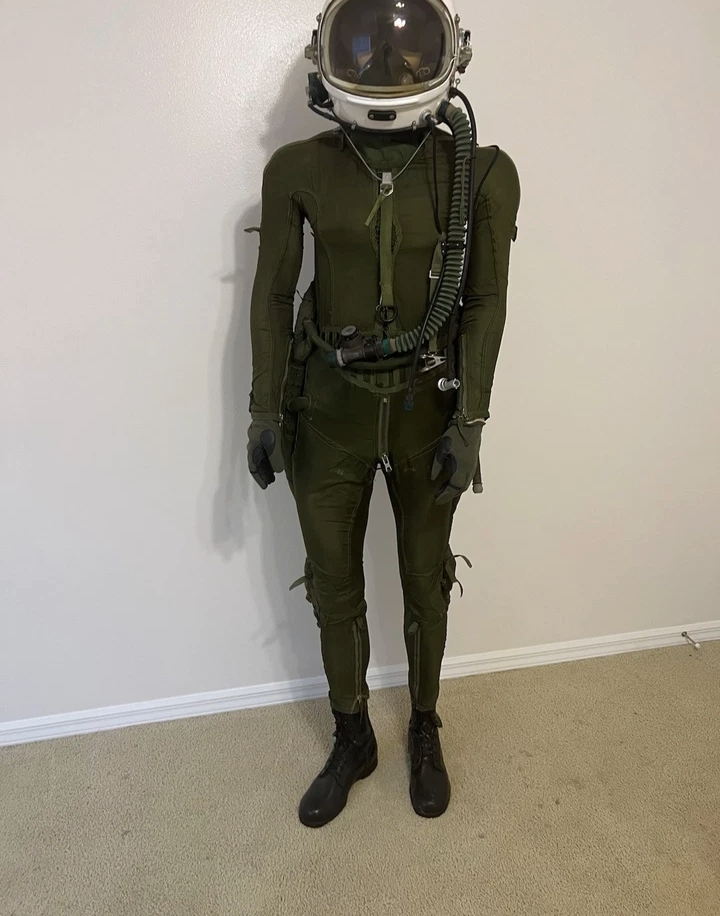
You can buy this thing on eBay for a couple of hundred bucks.
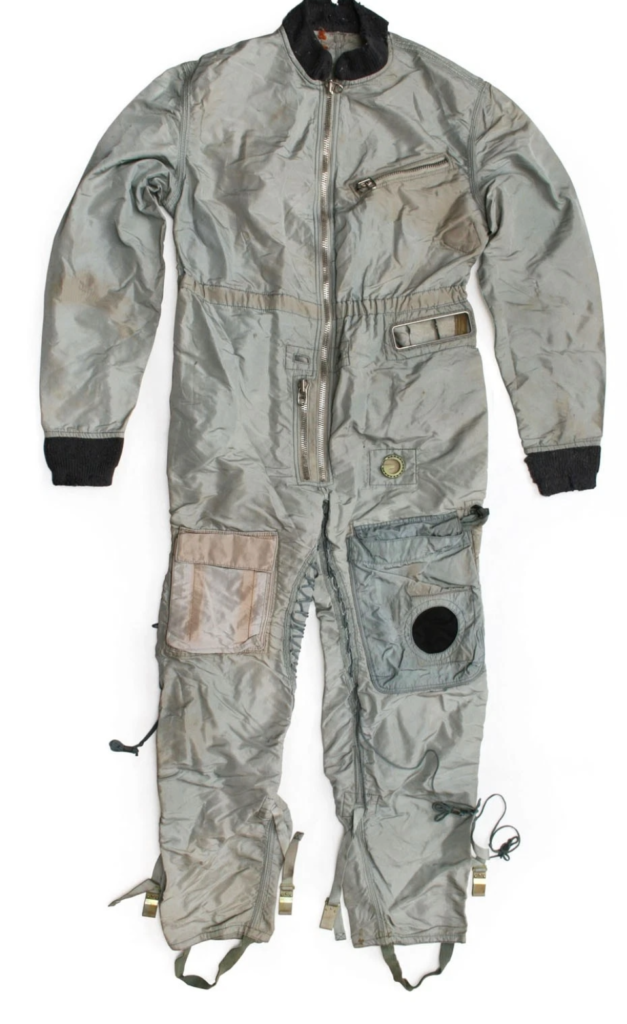
And if it’s cold, slip on some woolies. A snowmobile suit would work just fine. Hopefully with radiation protection.
Daytime temperatures in lowland equatorial Mars are not bad at all for someone raised in northern Canada. For example, the Jet Propulsion Laboratory publishes daily weather reports from the Curiosity Rover, which has been in Gale Crater for 13 years now. It’s mid-spring, and the high today (Jan 31, 2026) is 41F (it’s American, sorry for the Imperial measurement). It’s been above freezing all week. Temps there in mid-summer will reach the mid-60s.
Don’t go outside at night, though. Seriously. There’s virtually no water in the Martian atmosphere, so temperatures snap down to -70 to -90 as soon as the sun goes down. We can survive and work in those temps, but why would we if we don’t need to? The cold is dangerous, and it’s tough on equipment.
Radiation is an issue, but it’s not a show-stopper. The radiation flux in both Jezero and Gale craters, where NASA has rovers currently operating, is similar to that encountered on the International Space Station. Occupants of the ISS experience 0.4 milliSieverts per day, while the Curiosity Rover in Gale Crater has documented an average of 0.67 milliSieverts per day. A study of over 300 astronauts who have spent 6 months or more at the ISS could not identify any measurable increase in cancer rate at 0.4 mS/day over 6 months. It’s important to note that this is an UNPROTECTED measurement. So, for example, if a person spent 16 hours per day inside a building on Mars, like most people do on Earth right now, that dosage would drop to 0.22 mS/day, and if they wore even minimal radiation protection (eg a vest) or limited time outside to 4 hours per day, that number could easily be reduced to less than 0.1 mS/day. StemRad already makes an adjustable vest called the AstroRad that is proven to reduce whole-body radiation effects by 58%. We’ll talk much more about this in future posts.
Any beaver pelts, or other trade goods? Sadly, no. But unlike Luna, which appears to have always been a ‘dead’ planet, Mars has a geological history of volcanism, impact cratering, and water interactions. We expect it to contain ore bodies similar to those found on Earth, and of course, they have never been exploited. Imagine modern mining methods employed on the ore bodies of pre-industrial Earth! And then there’s water. We know that there is a LOT of water on Mars, and who doesn’t need water? Is there a market for those metals and that water on Earth? Probably not, but there will certainly be a market on Mars, as well as places like Lagrange Point Five and Earth Geosynchronous Orbit. Delta-vee from Mars Surface to L5 or GSO is roughly 5 kps LESS than from Earth Surface, so anyone wanting to purchase a 100-ton shipful of water or iron pellets will save $5 million just on shipping. So, a happy little trainer-wheels planet with enormous growth potential.
My next post will touch on the long-shots, where they are and why they’re long-shots, at least for now. Thanks for reading along!