
Why on Earth would I leave Earth?
To some people, that will sound like a silly question, but to others it won’t. Right now, I’m sitting on a perfectly acceptable planet, watching a couple of Yellow-winged Caciques squabble over a piece of fruit while I drink my coffee and plan my day. Should I go to the beach and play some volleyball, or maybe play pickleball at the deportiva? Go for a long walk through the jungle with my camera and a big stick? Hang out at my favorite open-air restaurant at the town square? None of those things will happen on Mars any time soon. If I decide to go, I will say goodbye to those things – and many others! – forever. I’ve tied my life to the natural world, living in small towns in western Canada, working and recreating in the bush. My memory banks are filled with special moments from those days, the sights, sounds, and smells that constantly remind me how unique, complex, and wonderful this planet is. So would I give all that up and – just go? Hell ya! In a minute.
Before we proceed further, let’s make some assumptions:
- It’s a one-way trip. I’m a colonist, not one of those sissified explorer tourist-people. We don’t stick a flag in the dirt, pick up a bag of rocks, snap a few pics, and head home. This is forever.
- As a first-generation colonist, my life expectancy is going down. Way down. When planning my first novel, I used a median post-Earth life expectancy of seven years, so if I make the trip with a bunch of 35-year-olds, I can expect that half of us will be dead by age 42.
- It will be stressful. Besides immediate fear of death in what will probably be many crises, I will always be aware at some level that the CO2 scavenge pump doesn’t sound exactly right, that scratch in my face-plate could turn into a crack at exactly the wrong time, and then there’s the sharing of grief over my friends who didn’t make it, and the lurking fear that I might be next. Even though they will be selected for hardy personalities, most of the colonists will eventually display various symptoms of chronic stress and/or traumatic stress disorder.
- There will be periods of great boredom. In a small ship for six months or more, in a crowded habitat during a three-week dust storm, there will be nothing to do except play games on my slate, listen to music, and try not to hear that clicking noise that Bob makes in the back of his throat for no apparent reason other than to drive me crazy.
- I will leave all the protections that society affords me. If Mary stabs me in the liver because Alice was flirting with me, that’s not a crime because there is no law establishing it as a crime, or specifying a penalty, and there’s no one in a position to enforce the law if one existed. Social mores are up for grabs. The colonists certainly will establish rules of conduct, but what those rules are, the penalties for breaking them, and how they will be enforced, will all be up to the colonists. If I have a grievance or if I feel threatened by someone, I can’t count on someone else sorting it out for me. It will be the Wild West on steroids.
This place is just sounding better and better! I sure hope no one asks me to draw up the recruitment brochure. So, does any of this sound familiar? It should, because these are almost exactly the conditions the first Europeans faced when they voyaged to the New World, and when they spread westward from the Thirteen Colonies. They died by the thousands, but they just kept coming. What drove those people? Why would they give up their lives in Europe, or in the settled Thirteen Colonies, to endure these hardships? There were probably as many reasons as there were individuals, but I think the key drivers fall into five broad categories:
- A sense of oppression. They may have felt endangered or marginalized because of their religious beliefs, sexual orientation, or race. Others will be looking for a fresh start in a place where they can say and do whatever they want, where they will be freed from stifling authority.
- Economic opportunity. Mars has the same land area as Earth. Imagine the mineral riches on a planet like Earth that has never been mined. And the new settlers will need food, shelter, transportation, and… Remember who always got rich in the gold rushes? The people who owned the grocery and hardware stores! The people who get there first and don’t die will become the founders of the great Martian families.
- Duty. People will go because they have unique skillsets that the colonists need (doctors) or because they belong to a hierarchical organization and go where they’re told (soldiers).
- Rugged Individuality. Some people just wanna be themselves, and may feel that they CAN’T be themselves in their home society.
- Adventure. Some people need to see what’s over the next hill. That’s why humans cover the planet. We’re restless. Why else would we live on Svalbard?
So what does that mean for the recruiting team, who must find people resilient enough to survive all the risks while not becoming problems themselves? The checklist will include some common characteristics, such as:
- A hardy personality, demonstrated as calmness and stability under pressure. Stress is a fact of life, but the demonstrated ability to manage stress loads will be a priority consideration when selecting new candidates. Melt-downs in a crowded phone booth are bad.
- Plays nicely with others. Being a ‘team player’ is not just a buzzword. Everyone will need all the mutual help and support they can get. Drama queens, schoolyard bullies, and lone wolves need not apply.
- Tolerance. Colonists will be literally rubbing up against others with different attitudes, opinions, and lifestyles, different everythings. Human life off-planet will be precious, and we will need to appreciate everyone, regardless of their color or flavor.
- A positive outlook. People who want to go to Mars are infinitely more valuable than people who are moving from their previous existence. When faced with adversity and setbacks, positive people can keep their goals in mind and work towards them, rather than lamenting their situation and wishing they could go ‘home’ and give things another try. Also, there will certainly be enough problems to go around on Mars without importing past grievances, culture wars, etc.
- Goal-oriented, organized, and self-disciplined. There will be lots to do and a chronic shortage of babysitters.
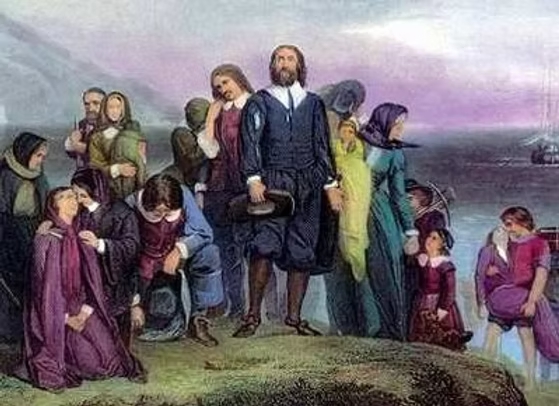
Plymouth Rock. 50% of these people were dead within a year. But the next ship brought more.
So, many people will WANT to go, but only a few will qualify. They have to be both smart enough to qualify and stupid enough to apply. Pretty boring, right? Boring is good. Thrill-seekers need not apply. And finally, handy is good. Scientists are a bonus, but electricians are essential. Civilization is constructed and maintained by people with large hands and cool toolboxes. The new colony will need people who understand how things work and who can build, maintain, and repair them.
My next series of posts will discuss the challenges involved in getting from here to there, and whether we have the knowledge and the equipment to make it happen.