
February 9, 2015 – Nha Trang and Da Nang
The bus ride from Da Lat, which is in the highlands, to Nha Trang, which is a seaside city, is roughly four hours. It’s a pretty ride through a temperate forest, but there are lots of corners and steep pitches as you descend to lower elevations.
Nha Trang is not a ‘touristy’ city for Westerners, but it certainly is for Russians. The military brings their soldiers in by the plane-load, as it’s a cheap flight, cheap holiday, and Russians get to come here visa-free in recognition of their contributions to Vietnamese victory in what I believe they call the “Third Patriotic War”, what we know as the Vietnam War. Whenever we went to a restaurant, they immediately brought us menus in Russian, and we would then have to hunt around for an English one when they realized we were Canadian. The Russians bring a lot of money into the city, but they’re not particularly well-liked. One waitress described them as having “big noses, thin lips, and angry eyes”.
Nevertheless, it’s a good place to get out of the bus and stretch our legs before heading north to Da Nang, so we’re going to spend two nights here.
(Reminder: To see images full-size, right-click on the image and select ‘open image in new tab’.)
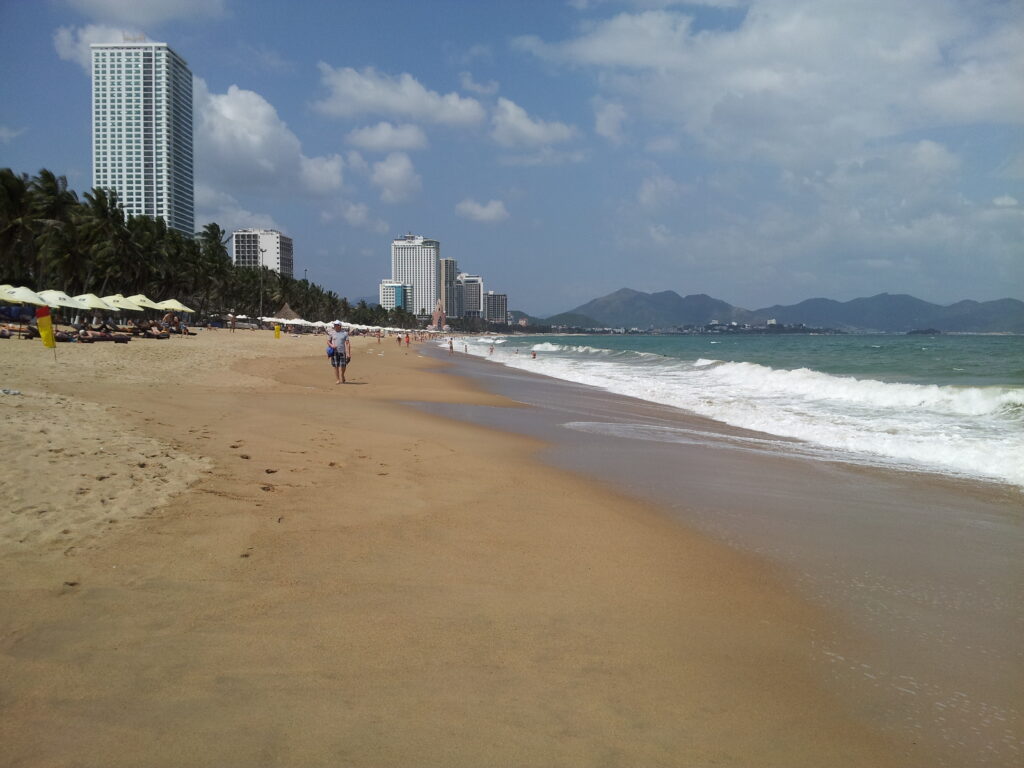
It’s a nice big beach, but rough this time of year. It’s quite calm during the summer, and very good swimming. Steve’s allergy to rip tides, large waves, and undertows flared up, so beach-walking it was.
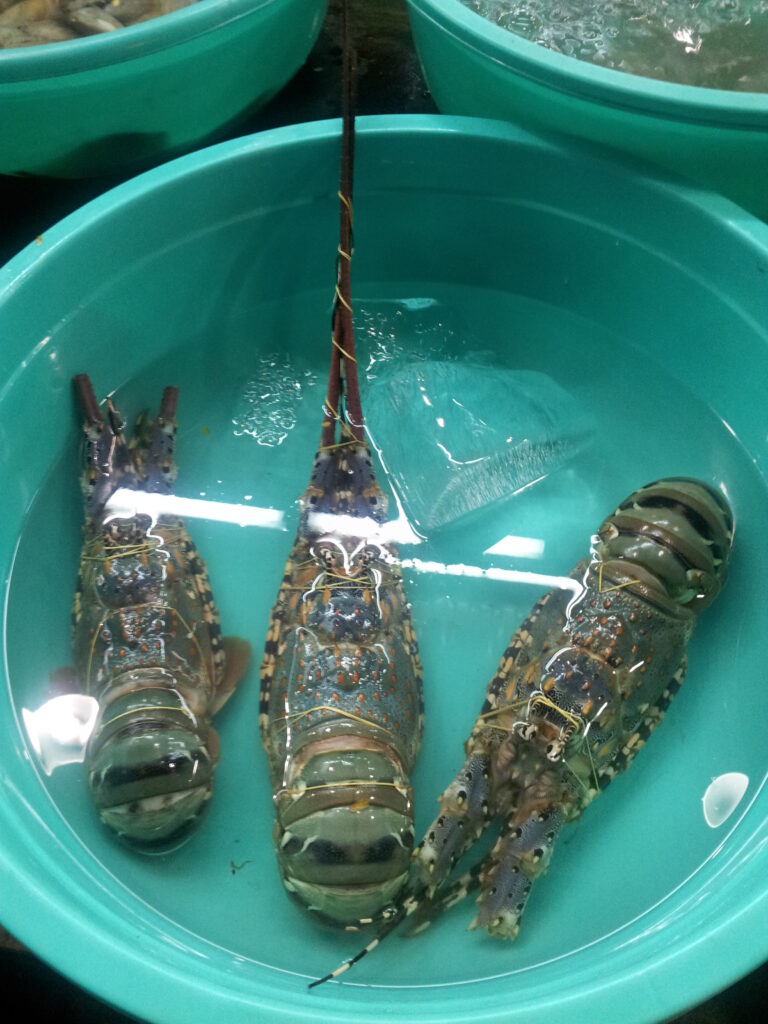
There is a night market, of course, and I swear somebody is making these things just to freak out the Russians. Worked with me, anyway.
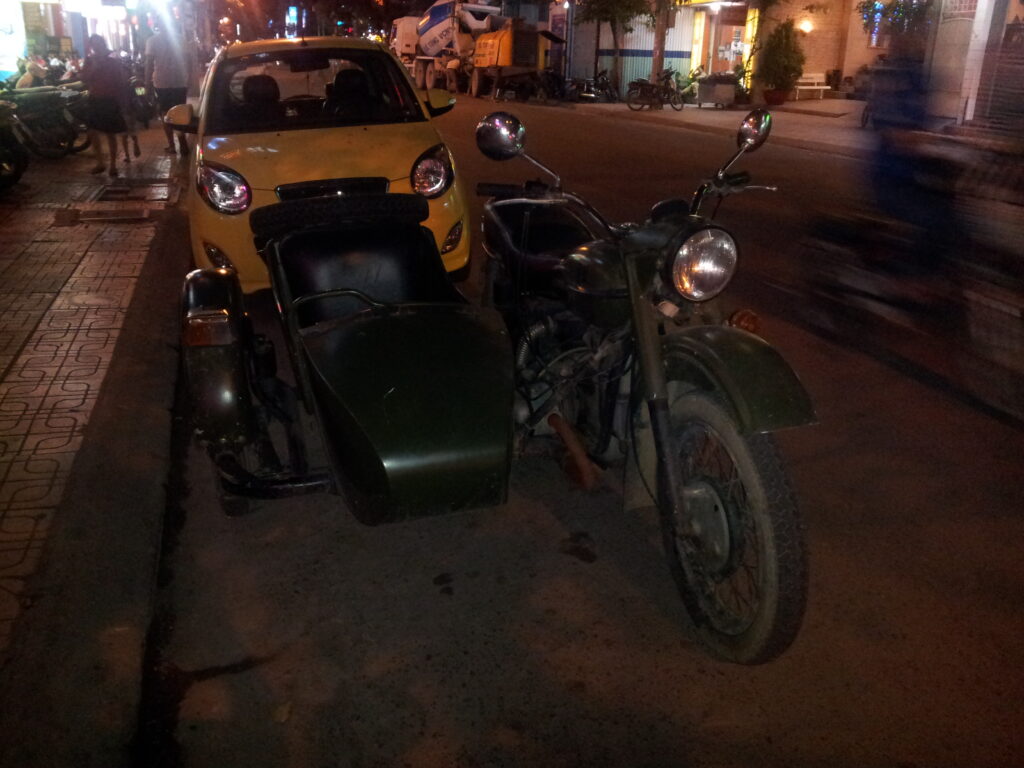
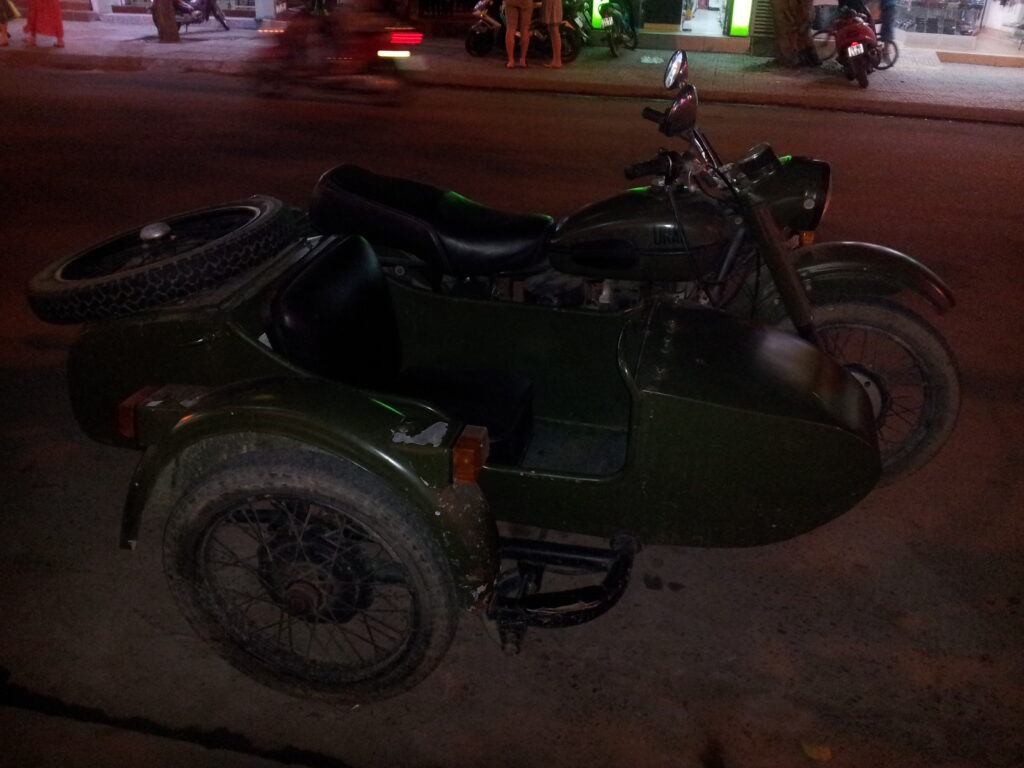
We’re in a hotel on Le Thanh Ton street, and we noted a couple of interesting restaurants during our afternoon walk, so that’s where we headed in the evening. One of the first things we stumbled across was this meticulously restored Russian military motorcycle. A ‘Ural’, I believe.
Dinner was a weird mix of Vietnamese with a Russian accent, but perfectly acceptable. We took a stroll along the boulevard after dinner, and Debbie found a combination museum/storefront selling stitched artwork, which was, of course, closed. That was our first stop the next morning, and what a treasure that was!

Note the paintings behind, these things are see-through.
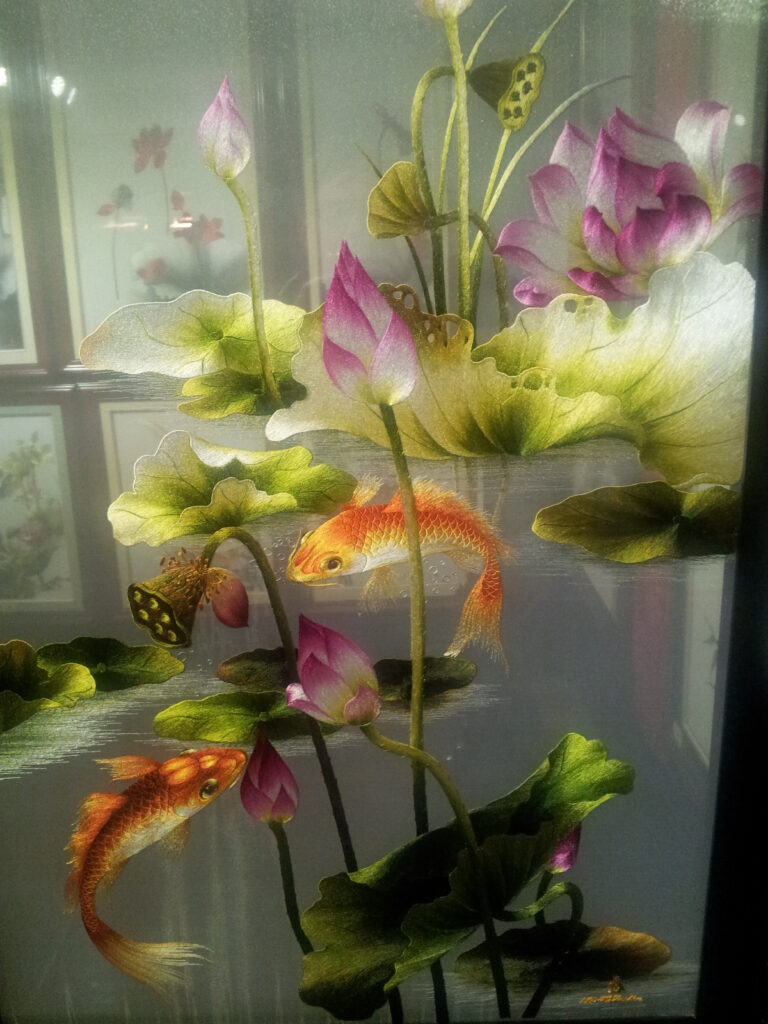
Exquisite.

They ship to your home if you can’t fit this into your backpack. Sadly, we have no place to put it at home…
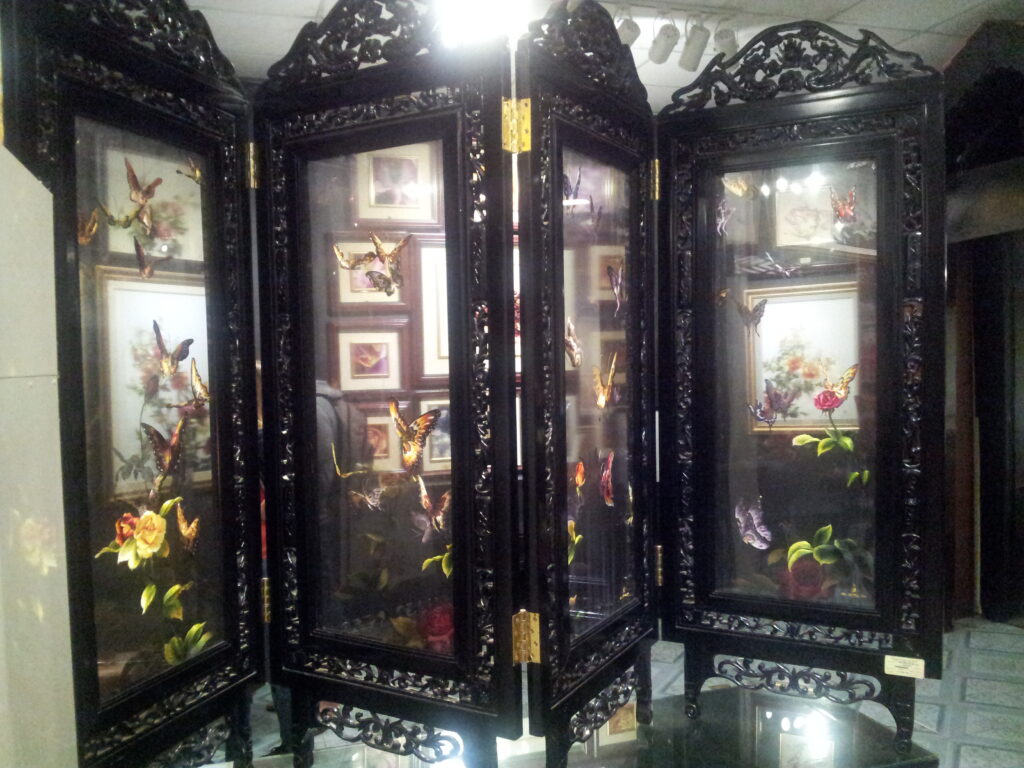
What an incredible piece.

A close-up of the stitching.
That was all we had time for, as our ninety-minute flight was leaving for Da Nang in the afternoon. The ten-hour bus ride is a REALLY bad idea; the roads suck, the drivers are rude, and the buses don’t have bathrooms. Taking the train sounds like a great idea, but we never checked out a train that wasn’t booked full for months in advance. Airplane tickets are affordable, and Vietnamese airlines are co-owned by Australian and New Zealand companies. They’re flying Airbuses, everything is properly maintained, and the aircrews meet international standards.
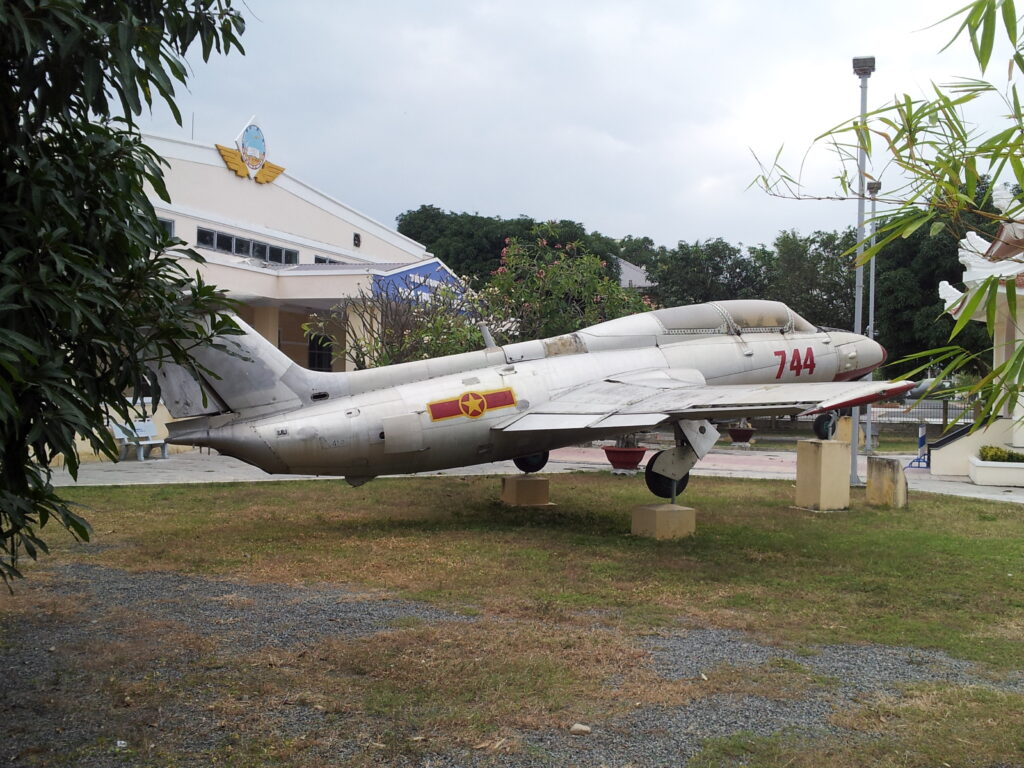
These are one of the first things we saw as we left the Da Nang airport.

Da Nang hosted a big American air base in the Vietnam War, and of course, it’s still here. The Vietnamese take pleasure in showing off many captured aircraft, which, of course, are rebadged with the yellow star. I think they acquired most of them when the South Vietnamese Army caved in ca. 1975.
Our cunning plan all along has been to spend at least a couple of weeks, and perhaps more, in Hoi An over Tet, the Chinese New Year. Absolutely everything comes to a halt in Vietnam over Tet. Everyone, and I mean everyone, goes home for the holiday, and then they all have to return, and there’s absolutely no mode of transportation available for a couple of weeks. So we’re going to hunker down in Hoi An. Da Nang is the stopover city for us, the place we fly to, or take a bus or train to, and then shift to a local bus or taxi to get to Hoi An.
Of course, there were a few surprises. The first was when we realized that our hotel, which was very convenient to the excellent beach, is more-or-less on an island, separated from Da Nang by the Han River. It’s a big river, and there are at least three major bridges that cross it. The middle one, which we use most often, is built to look like a dragon, and at night it is completely lit up with LED lights that constantly change color. It’s very striking!
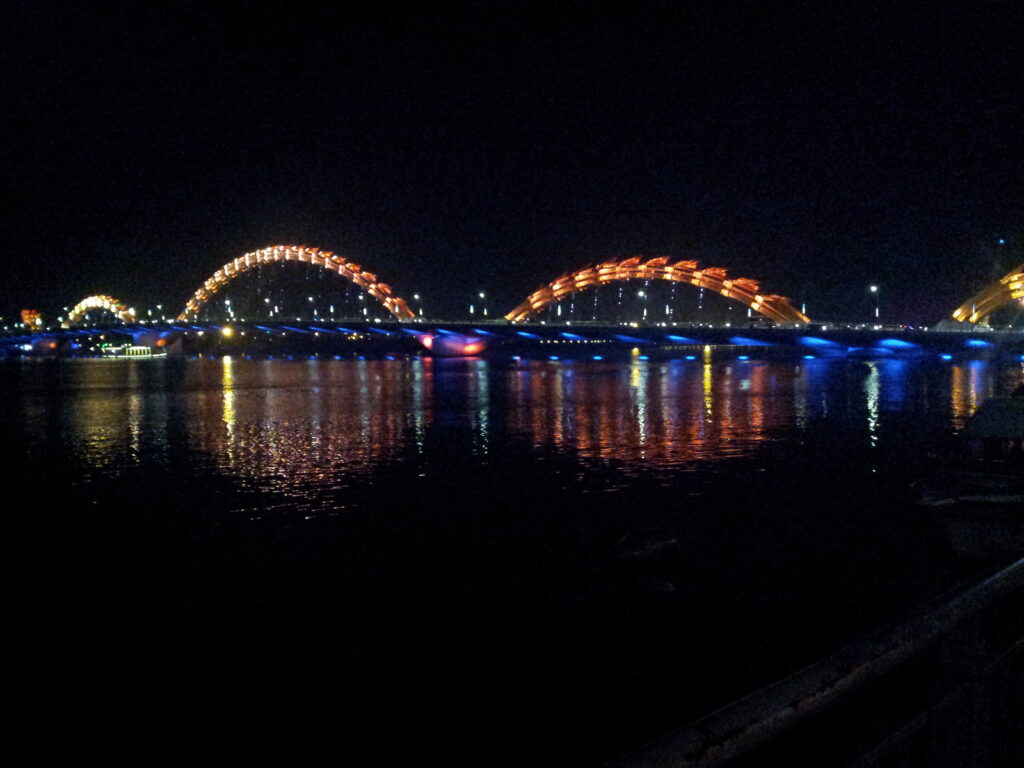
The Dragon Bridge. Head is on this end.
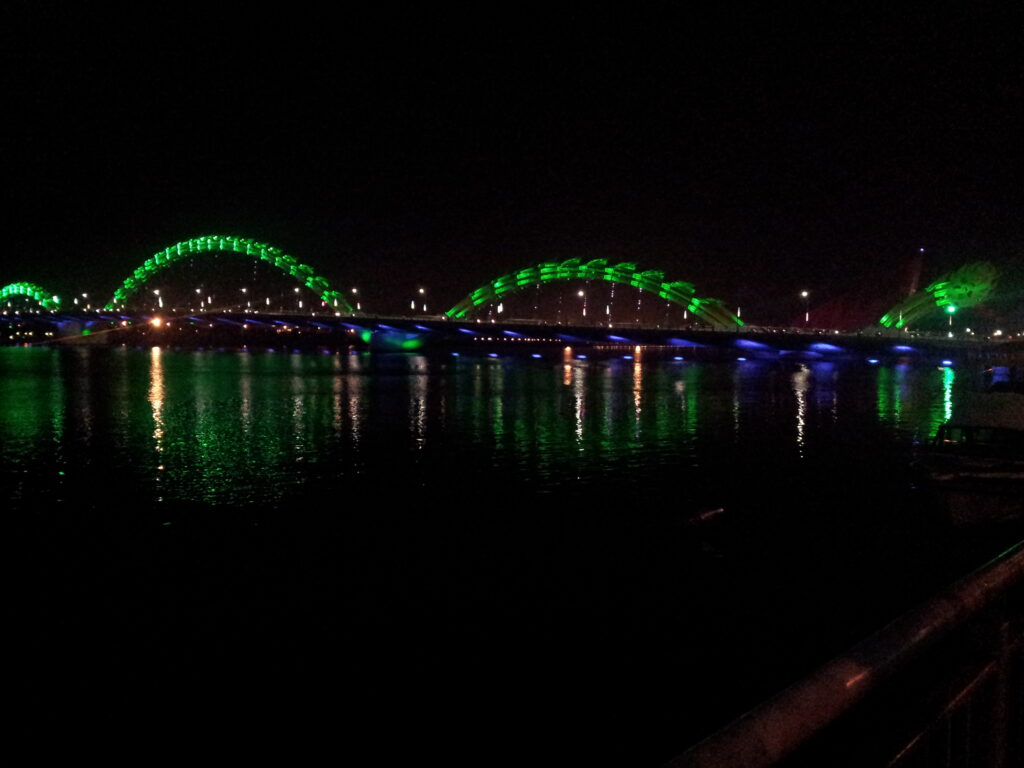
If you don’t like it, can I offer you one in green?

Blue? The colors fade from one into the next about every 15 seconds.
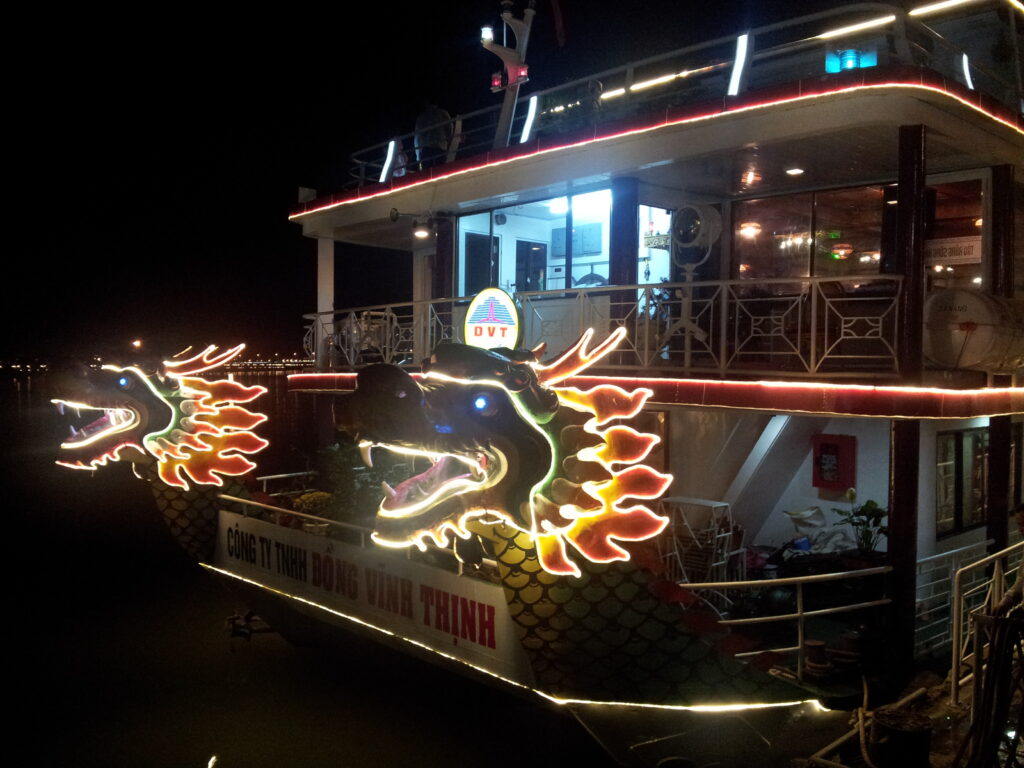
Dragon heads on the arse of a dinner-cruise boat.
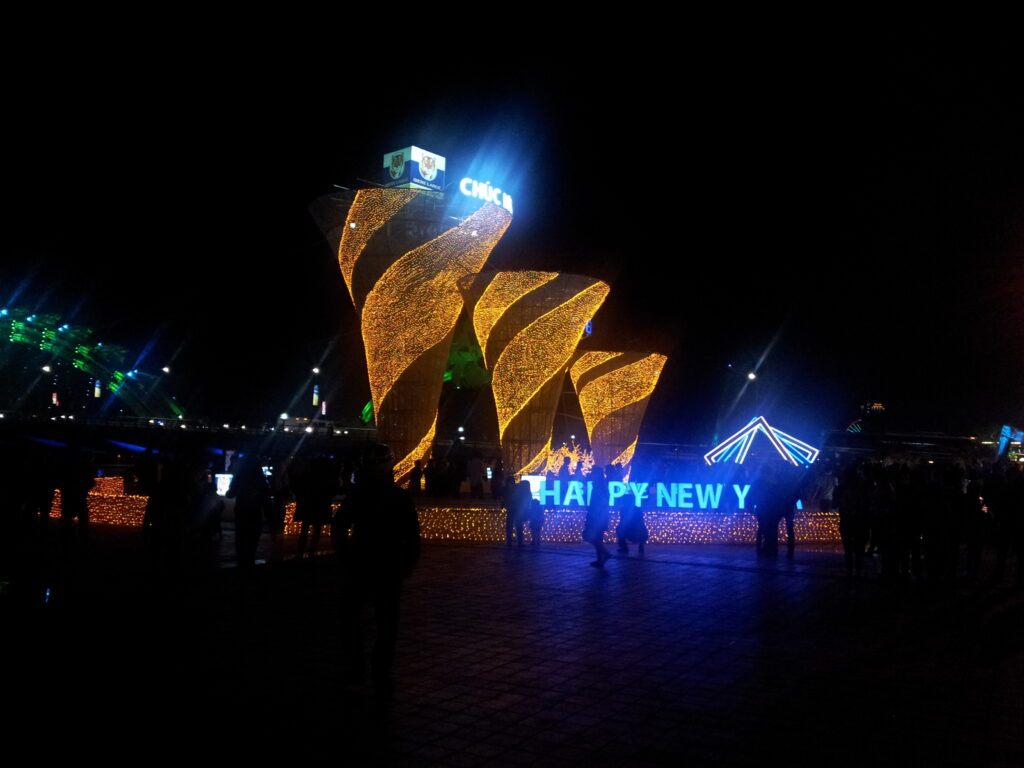
A ‘Happy New Year!’ sign in a little park near the end of the bridge. Not the little people in front, for scale.
As for the rest, it’s clean and pretty modern, and everything works. The beach goes on for miles, and if you follow it south for about five kilometers, you get to China Beach, which was famous as an R&R spot for American servicemen during the war. Da Nang has a big harbor, and it hosted an enormous American airbase and a US fleet at the time.
But now, it’s time to hop on a mini-bus and take the one-hour trip south to Hoi An, where we will be staying for the next ?? weeks!