
December 30, 2014 – Phu Quoc Motorcycle Tour – Day One
Christmas is over, and it’s time to see a bit more of the island. Deb was talking to a gentleman of our age who works some evenings at our restaurant, and he turns out to be an English teacher to locals entering the workforce, and he is also a freelance guide. He has offered to take us on two full-day motorbike tours, one for the North Island and one for the South.
So here we are at 8 in the morning of the 27th, climbing onto the back of two motorbikes belonging to Hong and one of his buddies. Deb’s driver looks like he’s about thirty, and he never takes his mirrored sunglasses off. Deb was a bit nervous about the whole motorbike thing at first, but it turns out that we never topped sixty kph anywhere during the two days, including on four-lane divided highways. The occasional vehicles passing us were probably doing eighty. I don’t think I ever saw anyone on the island driving faster than that.
Finding Hong was great. One secret to hiring a motorcycle (MC) driver is to find one who is shorter than you so you can see over the top of his helmet. Deb rode on the back with Hong because he spoke English, and she could hear him while driving. Steve, the deaf guy, got the driver who couldn’t speak English because he couldn’t hear him anyway!
(Reminder: To see images full-size, right-click on the image and select ‘open image in new tab’.)
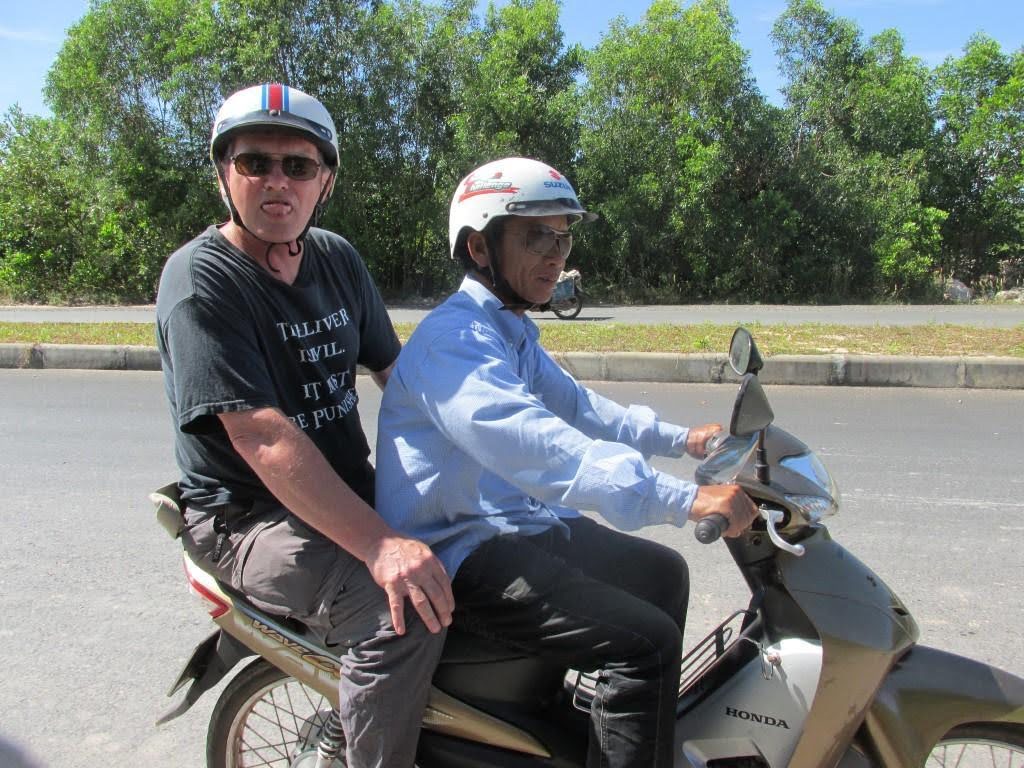
Perfectly happy deaf guy.
Hong is a Buddhist, so when his helmet almost blew off the 2nd time, Deb put her hand on top of it until he could pull over to tighten it again. She then remembered that she had touched his head and immediately apologized profusely. He said, “Don’t worry, it did not count.” There are 2 things you NEVER do with a Buddhist: never touch the top of their head and never point the bottom of your feet at them. They believe that their spirits enter the body from the top of the head and leave through the feet. But his helmet never came loose again.

Any vehicle with flowers in front of it is a Buddhist vehicle. The owner had prayed to Buddha to protect him on the highway that day.
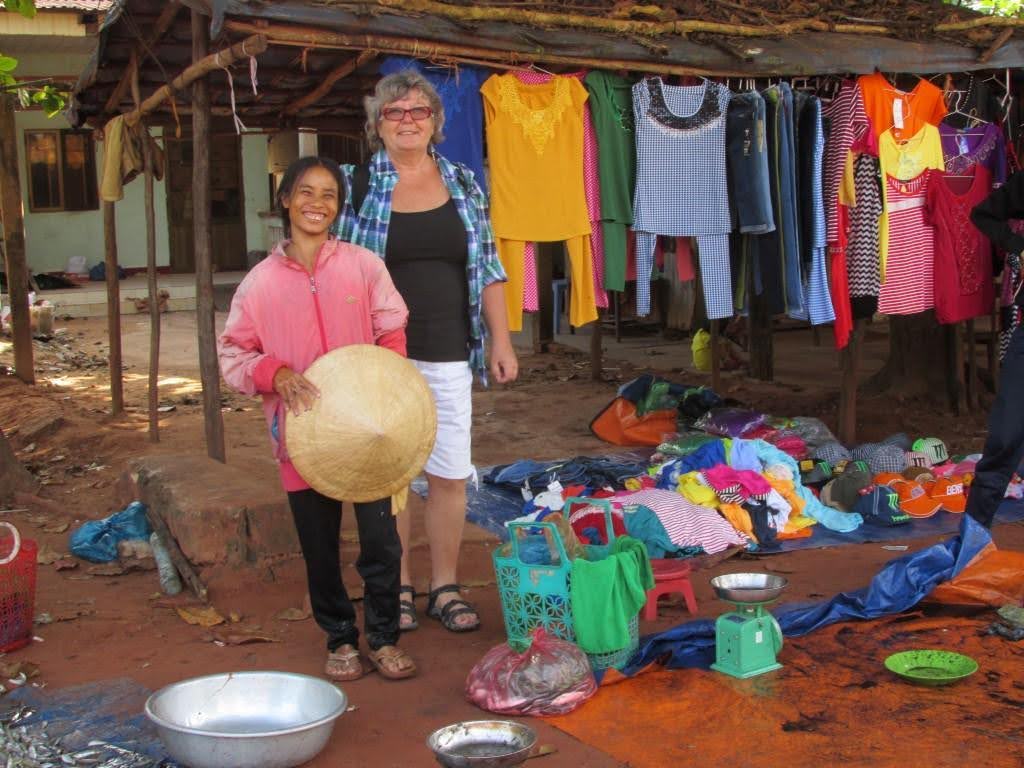
One of the 1st stops was at a tiny fishing village. The fishermen’s wives put out their husbands’ catch for sale. The ladies here are very shy. I asked if I could take their photo, and they waved me away. Hong managed to convince them that it would be OK if he took the photo. The sad thing is, with all the new fancy schmancy hotels going up everywhere, the fishermen are being displaced, and the government is moving them inland away from the beaches they have always lived on. Hong was very incensed about this and said the fishermen are very sad, angry, and tearful. They will no longer see their homes on the shores when out fishing. They fish four months on the west coast, then four on the east, with four off for the monsoon season. Hong laughed because he said most kids are born during the same time of the year, the monsoon season. After all, there is nothing better to do than have sex.

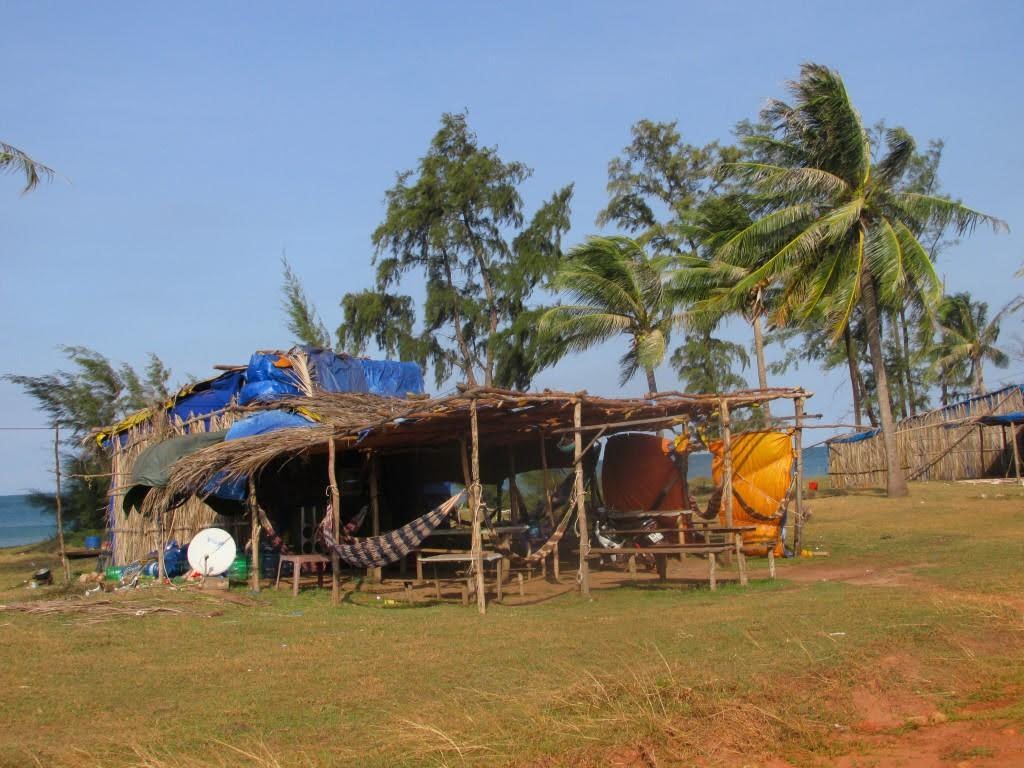
A typical fisherman’s house, complete with location, location, location, satellite TV, and front deck. A simple life.
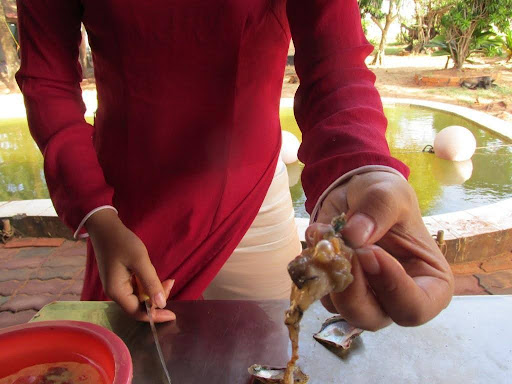
Our next stop was a pearl factory, with the farms just offshore right in front of the place, and of course, a sales outlet. It was pretty interesting; they had people out front explaining the entire process and popping oysters open to show us where the pearls were hidden. The shop had plenty of pretty high-end jewellery at what I thought were very reasonable prices. I couldn’t talk Deb into any pearls, but she did purchase a very nice carved mother-of-pearl pendant of the Phoenix.
Deb: The pearl farms were interesting, learning about the distinct qualities, sizes, etc. But I was not in the mood to buy…besides, my friend Betty had just given me a string of pearls that made these pearls look fake. Having said that, the prices were low compared to what we would pay at home. I bought a beautiful Mother of Pearl Phoenix for about $10.00.
Then it was up the highway to the north end of the island, and we took a 20-kilometre country road (basically one-lane rough pavement) through the rainforest and over to the north-west corner of the island. The drive through the forest was beautiful, with the trees hanging over the road, making a cool, shady path for us. Midway through the rainforest, we stopped off for a ‘jungle walk’, which was pretty tame for anyone from BC but gave us a chance to get a look at the bush and take some photos before we headed off again. A few kilometres later, Steve noticed a VERY significant black-and-white spider crawling across his driver’s back about 8 inches in front of his face. He couldn’t decide whether to slap it and startle the driver enough to drive off the road (a Bad Thing), or flick it off and have it land on Steve and bite him in the throat (a Very Bad Thing), or try to twist out of the way and fall off the bike (an Extremely Bad Thing). So he just yelled at his driver until he pulled over, climbed off, flicked it off, climbed back on, and away we went. Then Steve got to spend the next 10 kilometres wondering what was on HIS back….
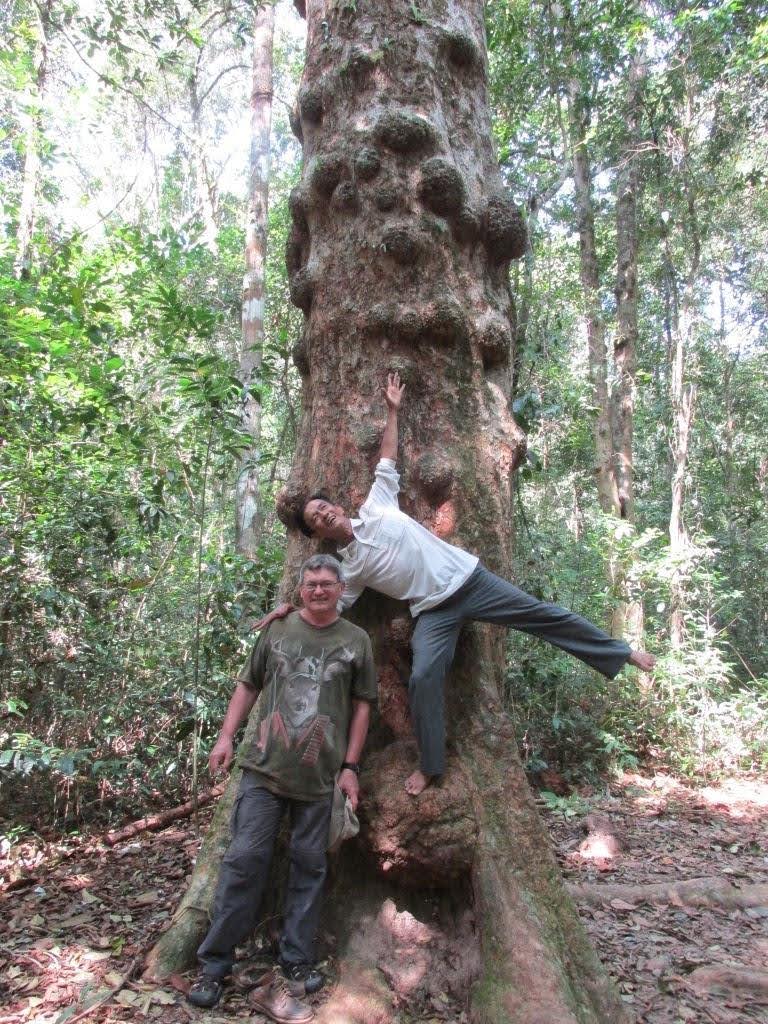
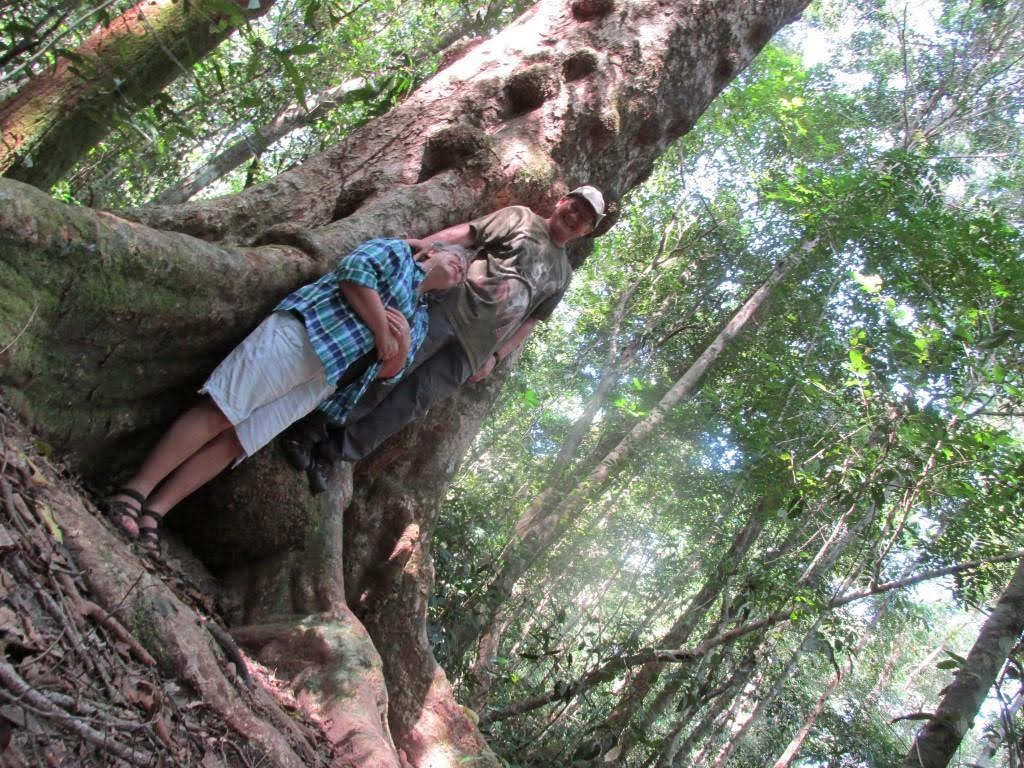
On the way through the forest, we stopped at the ‘rain forest’. Here is our guide, Hong, hamming it up for the camera on the Banyan Tree, which is the oldest tree in that forest, approximately 500 years old.
When we got out of the forest and back to the ocean, we had a brief photo stop at a little ‘fishing village’ right at the north-west tip of the island, where we were only 4 km from Cambodia. Hong explained that the local fishing fleet is 50% Cambodian and 50% Viet and that they have been known to actually catch fish when they take the occasional break from smuggling. Apparently, there is a thriving business here, Hong says there is more traffic on the highway at night from smugglers than there is during the day from normal people!
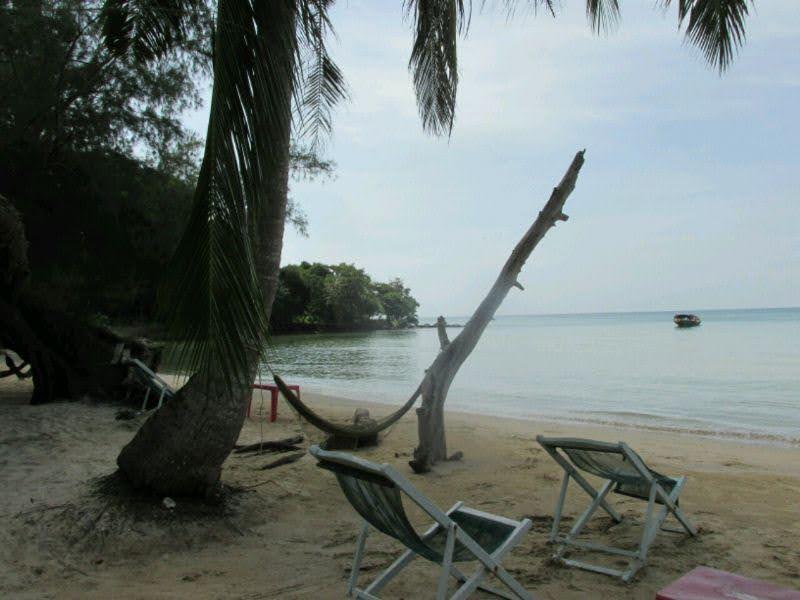
We then headed down the island to a lovely beach in a beautiful cove, which had perhaps ten people on it. There was a little bar-restaurant, palapa tables, and hammocks on the beach, where we had lunch, drank beer, and swam for a few hours. Have to decompress, you know.
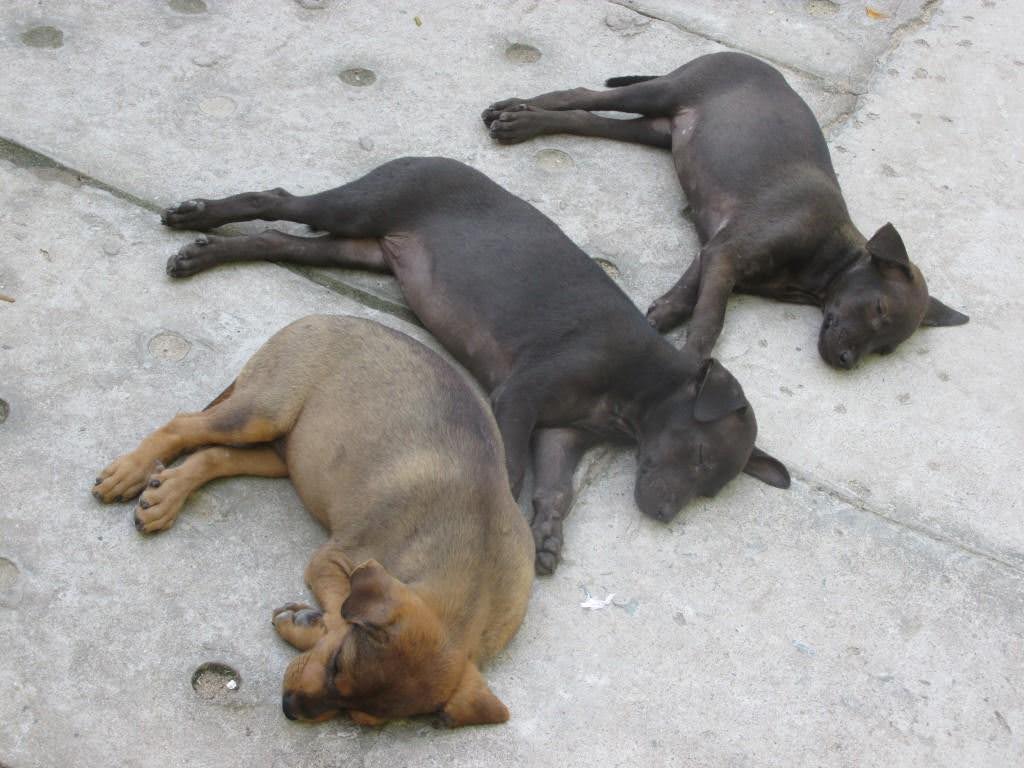
Deb: After an exhausting morning riding on the back of a bike, we stopped for lunch. The brown one looked particularly appetizing…
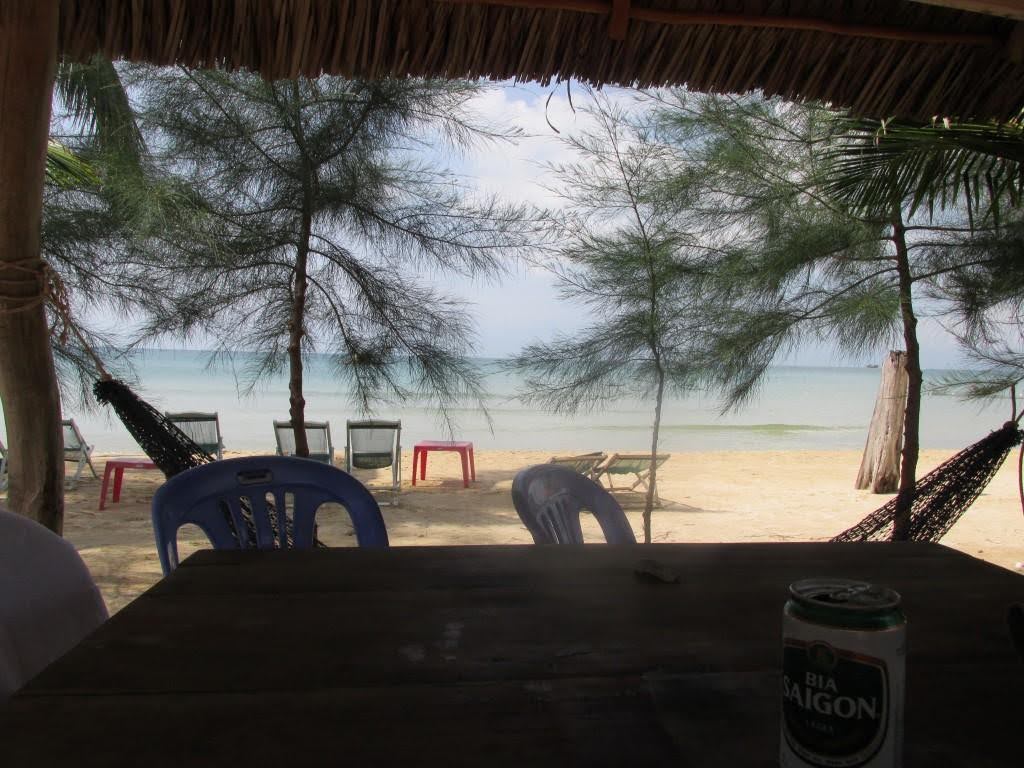
The view from our lunch table.
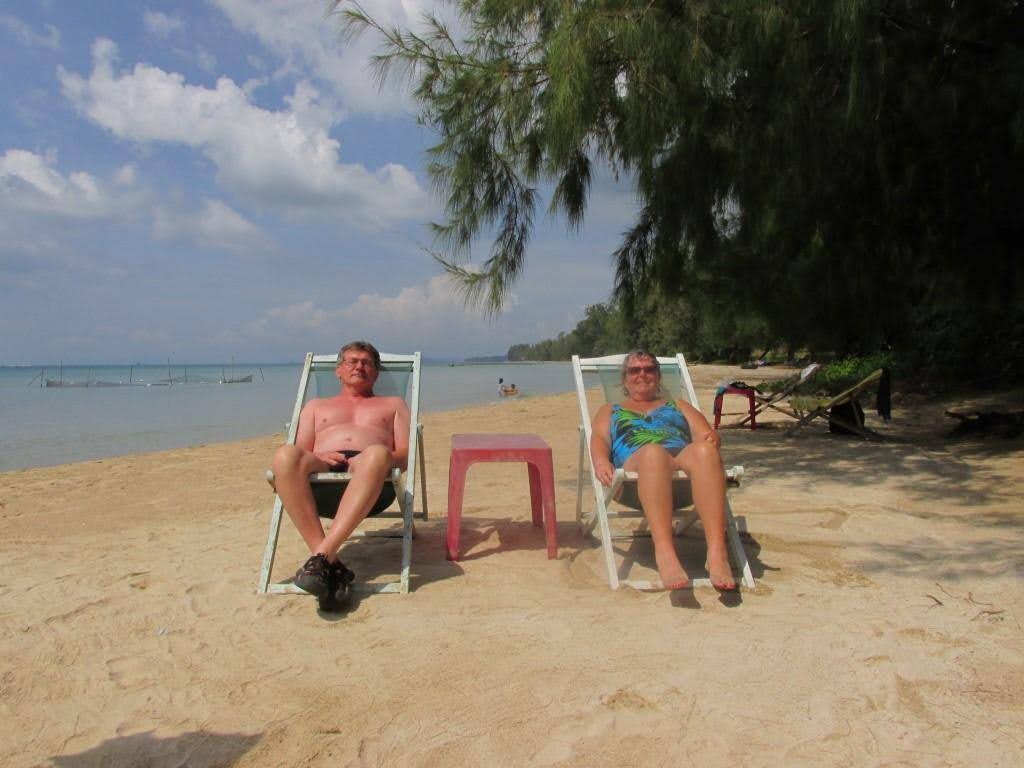
Stopped, had lunch, a swim, a snooze, a beer, and off we went.
By then, it was mid-afternoon and time to head home, but Hong had one more stop for us at a pepper farm, which was very interesting. We had seen these plants that looked like pole beans or hops, very tall and cylindrical; turns out they were pepper-trees, which form one of the principal cash crops of the island. Hong walked us through the entire process, explaining how the trees are cultivated, fertilized with cow dung & fish, how the crop is harvested, and how the fruit is processed to become pepper.
Deb: The Pepper farms were pretty cool. Green peppercorns mean they are not ripe. They say the red is the best, but once they are dried, they are all black, so you can’t tell the difference. I looked in the market for just red peppercorns, but they were always mixed with salt, or shrimp, or some other food I had no idea what it was. I finally gave up and bought none.
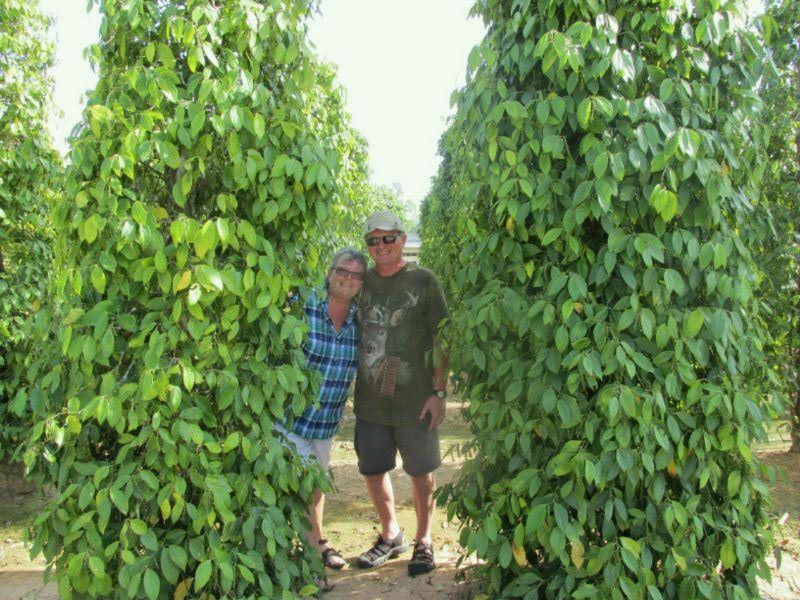
Pepper heads.
That’s all very cool, but I’m not, and I hear a beer calling back at the hotel! But that would be too easy…
Deb: When out in the middle of bloody nowhere, what should we see but a Disneyland Water Park that you just wouldn’t believe. I can’t remember just how many hectares this place is, but it is massive! There is a 5-star hotel beside it that is recommended for Russians only, and they have blocked off the beach to anyone who is not Russian, including & especially the locals. Anyone can go to the water park, though.

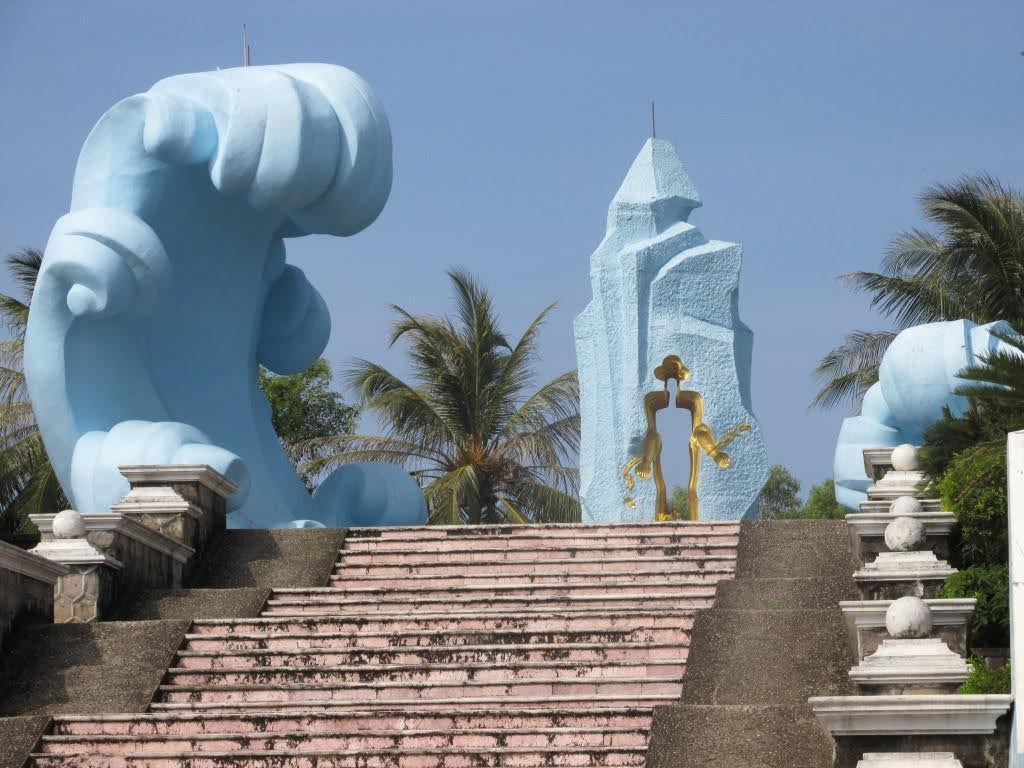
This is the Russian War Memorial, which our guide quickly drove by but did point out. He also pointed out huge ‘apartment’ complexes being built in Russian-only areas that come complete with guards at the gates. Since the ruble started falling, it’s estimated that at least 30% of the Russians have left the island. Not sure what will happen to all those huge hotels that are being built on both coasts.