Say, Debbi. Do those look Like Cows To You?
Wood Buffalo National Park is THE largest national park in Canada. You can do every outdoor sport known to man here. And guess what, it has the largest herd of bison in the world. It is a UNESCO World Heritage Site. The park is huge .. larger than Switzerland! A greater portion is located in the northeast corner of Alberta. And.. home to the world’s last surviving whooping cranes. We never saw any whooping cranes as they are very elusive. Their nests are so far out in the wetlands that even the rabbits pack a lunch to get there.

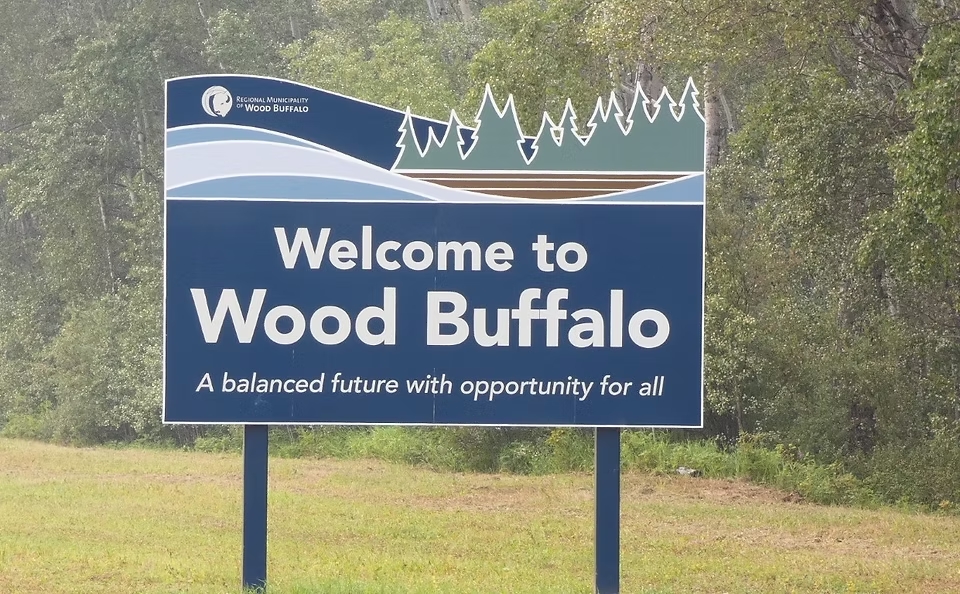

I was pretty excited when I saw this…never seen a Bison before, let alone walking up the road.
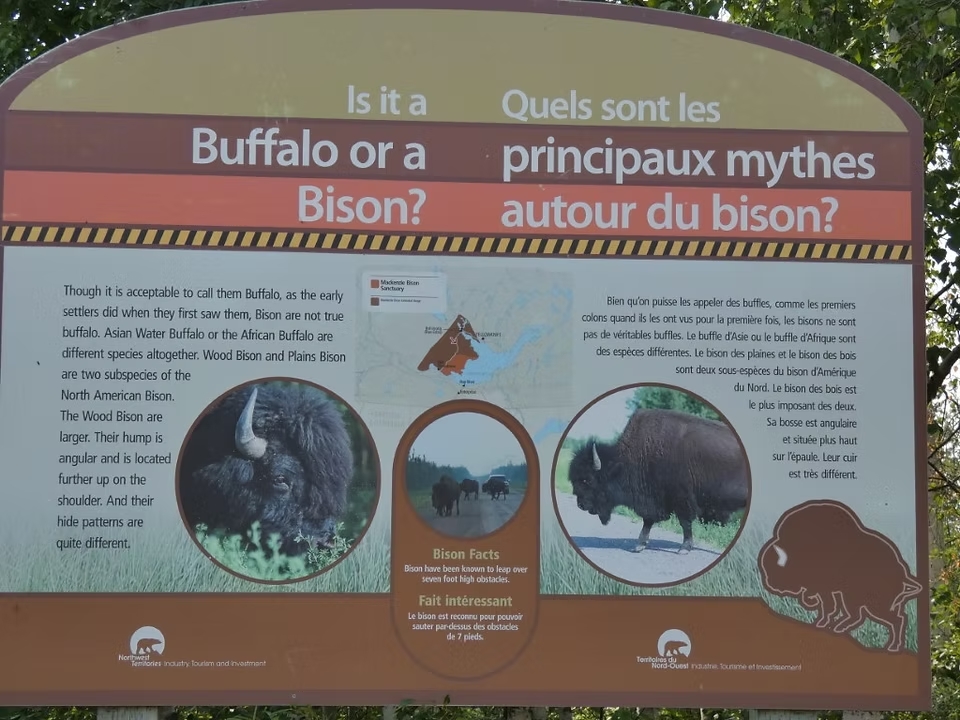
The bison is not a true buffalo. The Wood and Plains bison are two subspecies of the North American bison. The wood bison are larger. Their humps are angular and are located further up on the shoulder…and their hide patterns are quite different. Some of the bison we saw are BIG BOYS!!! Bison have been known to leap over 7-foot-high obstacles ..impressive for their size.
Their diet is mainly grasses and sedges, willows, and branches. In spring and summer, they will graze in dry meadows. In the fall, they feed on lichen. In winter, they prefer frozen sedge meadows and lakeshores.
We drove through the Woodland Bison Sanctuary and the Mackenzie Bison Sanctuary. These are located between Behchokò to Yellowknife. The Mackenzie Sanctuary is home to the largest, free-roaming, healthy population that is free from the Bovine Tuberculosis and Brucellosis infections found in all other Canadian Bison populations – unlike the Woodland Park Bison on the way to Fort Smith. The Woodland Park ones, unfortunately, carry both infections. Brucellosis causes spontaneous abortions, so it can have a huge effect on herd size.
The bison herds have extended their range. They will go where they want to go, but there are Bison Control Areas, and if you see a bison in that area, you need to report it right away. These bison-free areas are buffer zones to keep Tuberculosis and Brucellosis from spreading.

I think those last three might also signal ‘about to poop’. Just sayin. Or, swiping at the flies.
The tail tells the tale. As we passed these big boys, I was checking out their tails. In all my photos, I don’t think there was one that had me worried, but then again, I never got out of the vehicle, and I have a pretty good telephoto lens.
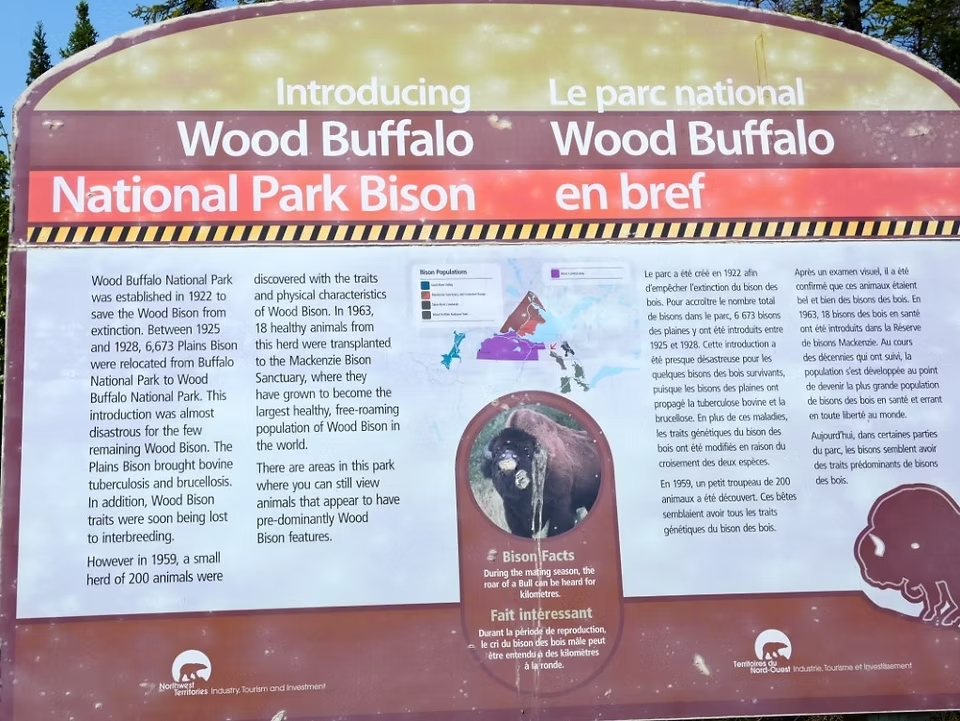
The park was established in 1922. “Plains Bison” were relocated here from ‘Buffalo’ National Park to ‘Wood’ National Park (who names these things?) Anyway, it was a near disaster. The Plains Bison brought in the Bovine Tuberculosis and Brucellosis. The interbreeding caused the Wood Bison’s traits to diminish. Then, in 1959, an isolated herd was discovered with the traits and physical characteristics of pure Wood Bison. Yayyyyy! In 1963, 18 healthy animals from this herd were transplanted to the Mackenzie Bison Sanctuary on the way to Fort Simpson. Today, they are the largest healthy, free-roaming population of wood bison in the world.
When we are driving by these guys, some have a much bigger hump than others, and some have the hump closer to the head. Regardless, they are all big. Older males will leave the herd and strike out on their own. Younger bulls stay with the herd and watch over the females and calves. The older males on their own are huge!

This is an older lone bull. He doesn’t need the protection of a herd ..he is a herd. lol
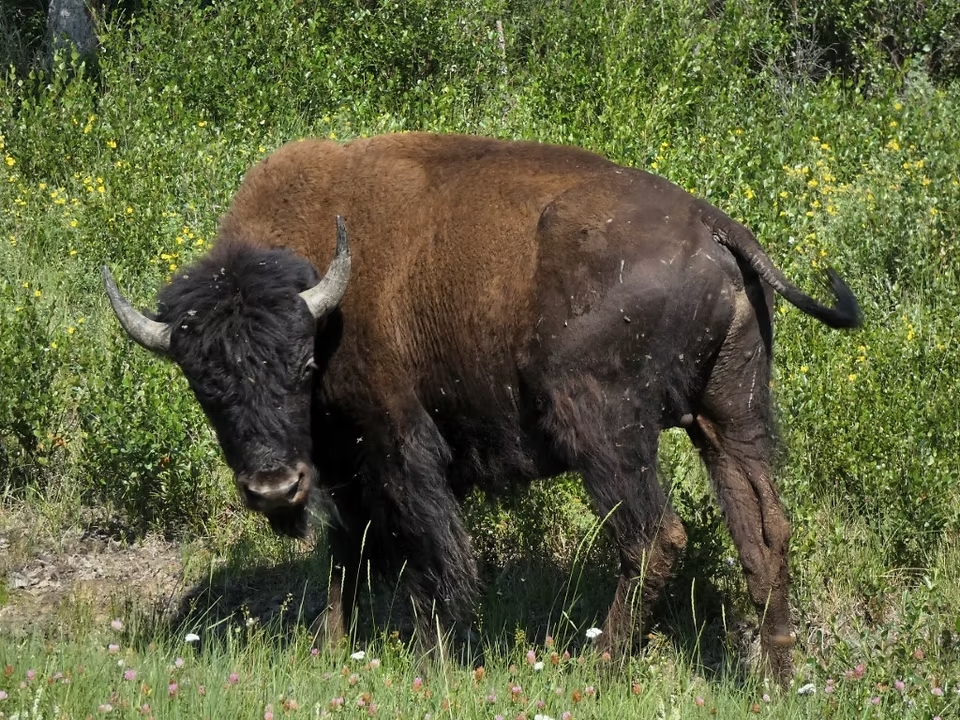
This younger bull is still with the herd, as he needs protection from wolves, grizzlies, etc.
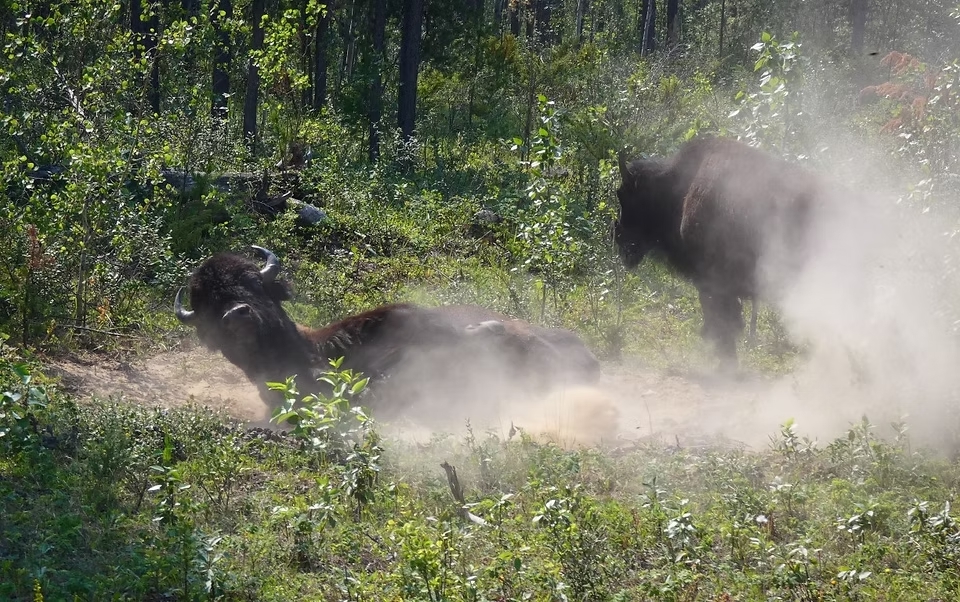
This is a Bison in a “Wallow”. When the insects – especially horseflies – become unbearable, they roll in the sand to get rid of them.

There are lots of wallows along the road, which people conveniently cleared of trees for them.
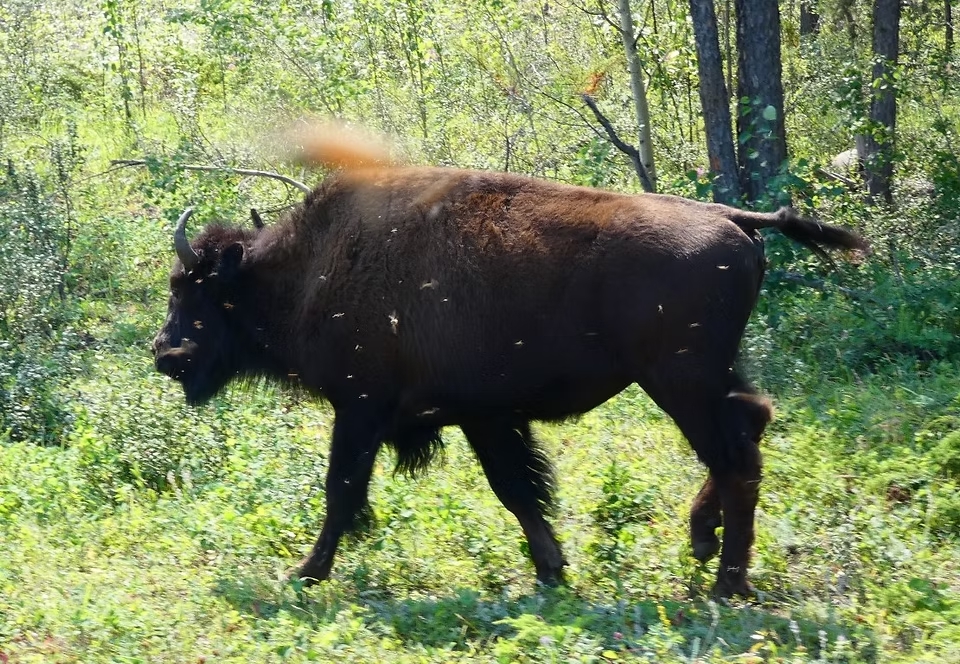
Those are horseflies, or deerflies, or dinosaur flies. They are big, and they’re everywhere, especially on wildlife. That orange blur on his shoulder is one on our side window that is out of focus.

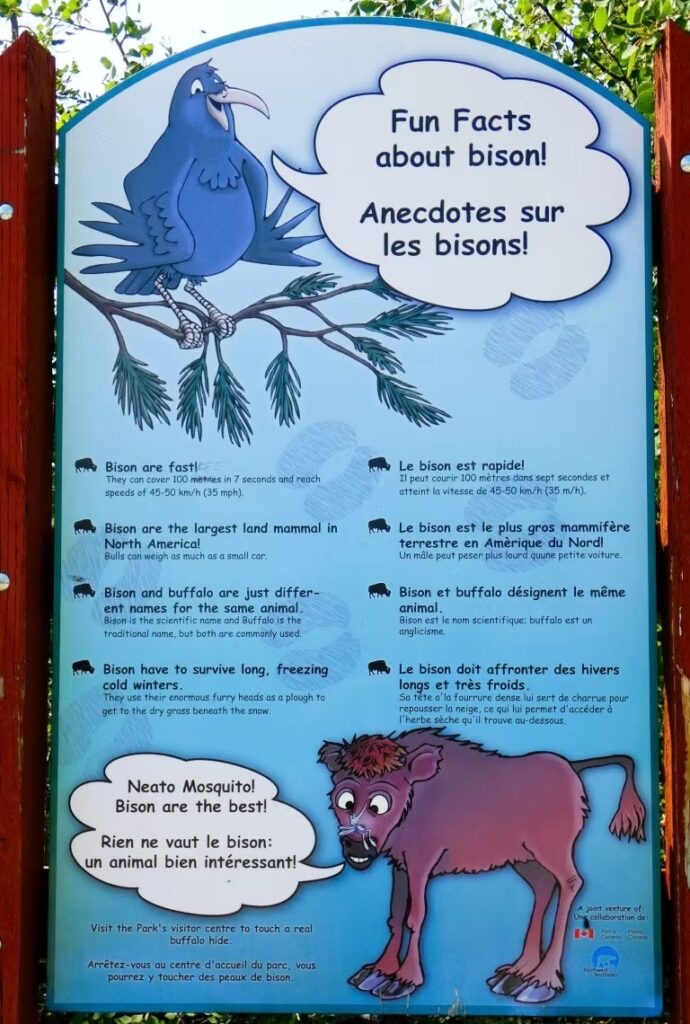
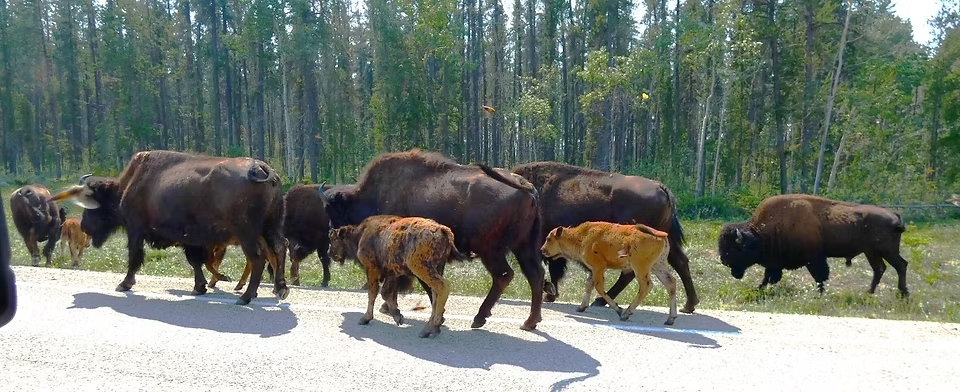
The calves are moulting.
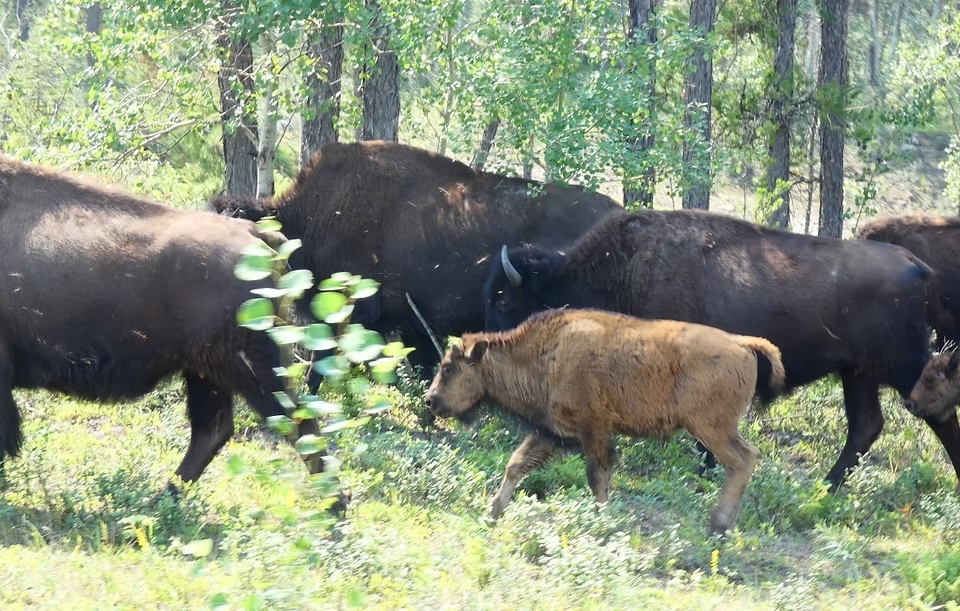
The tail is in the ‘alert’ position. Or ready to poop…


After a while, they all start looking the same – but I will keep taking photos until either the Bison go home or I do.