july 26 – Fort Smith
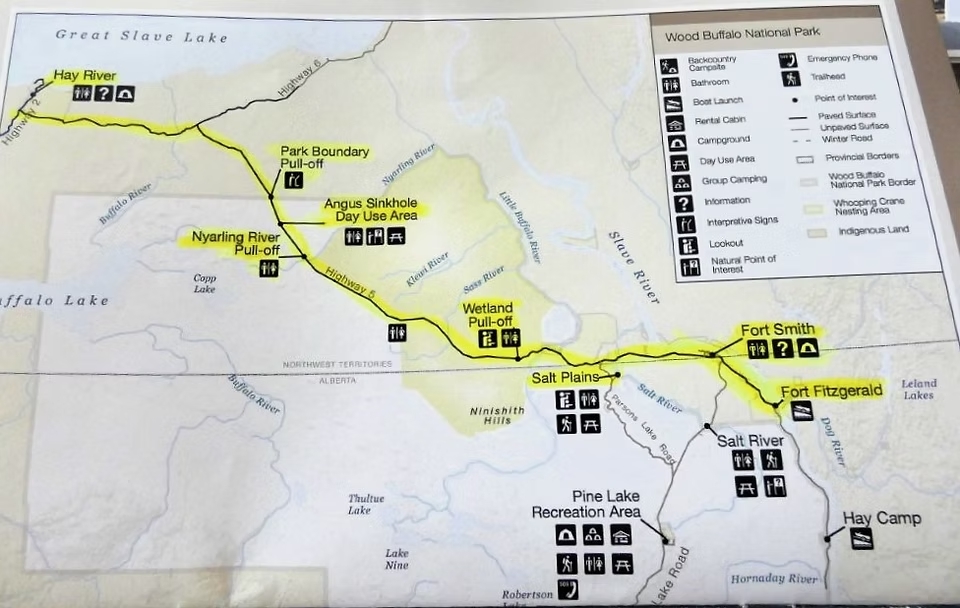
Hay River to Fort Smith to Fort Fritzgerald & back to Hay River

This trip took us several days. There are NO services from Hay River to either of these communities, so make sure you gas up. If you are pulled over, everyone stops to see if you are ok.
Remember, if you click on a photo, it should enlarge and you should be able to scroll through all the photos.
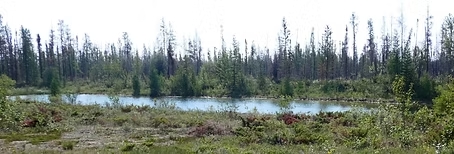
This is called a ‘borrow pit’. When building the roads, they sometimes needed to ‘borrow’ the surrounding gravel/dirt to raise the road above the water table level. Later the hole rapidly filled in with water as the water table is very high. Very pretty little ponds!
Fort Smith is located beside the Slave River. There are HUGE rivers in NWT, and its hard to keep them straight, but they are big. We saw numerous big ones in Russia, but these rivers in the NWT are impressive too. There are 4 sets of rapids in the vicinity of Fort Smith: Cassette, Pelican, Mountain, and The Rapids of the Drowned. These rapids separate the NWT from northern Alberta.
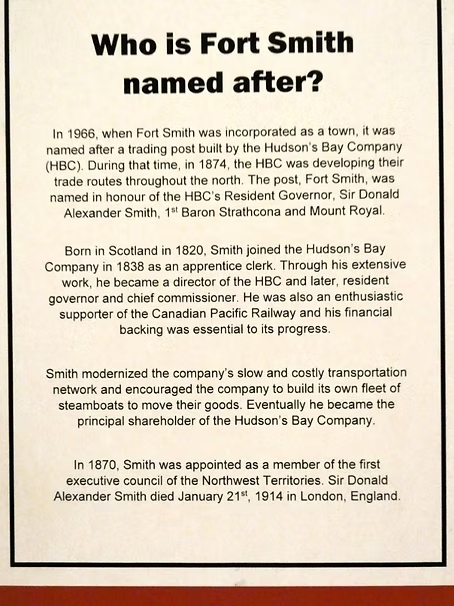
The population of Ft. Smith is 2,248. It’s named after the Hudson’s Bay Company’s Governor, Sir Donald Alexander Smith The First, Baron Strathcona and Mount Royal. He started as an ‘apprentice clerk’, and eventually became the principal shareholder of the HBC with many accomplishments along the way.
Fort Smith began as a trading post at a favorite campsite of the voyagers traveling the 1600-mile water passage from Fort McMurray to the Arctic Ocean. Before it became an HBC post, fur traders had been using this area for 100 years. In 1872, the HBC established a permanent post, and the Roman Catholic Mission was built in 1876. The Church had slower canoes, I guess. By 1911, the settlement was the major trading post for the area. Fort Smith was once the political capital of the Northwest Territories. It was now known as “The Garden Capital of the North”.

This area is famous for the Wood Buffalo National Park. I think I will do a post on that separately. But in the meantime, I had never seen Buffalo/Bison except in the movies, so when we came across a herd on the highway, I got pretty excited and took a video and lots of photos.
INSERT BOOFALOO VIDEO
I’m hoping the video plays, but I will include photos later.

Fort Smith boasts lots of hiking trails, and it’s an excellent place to view the northern lights as it is right next to the largest dark-sky preserve in the world. A dark sky preserve means artificial light pollution in this area is restricted, which is not that difficult in the middle of nowhere. We did not see the northern lights because the smoke from forest fires was quite thick all the time we were there. It also offers world-class paddling, but you’d better be damn good, by the looks of the rapids. We could only access these rapids from afar, as to get down to them, you are taking your life in your hands scaling the cliffs.
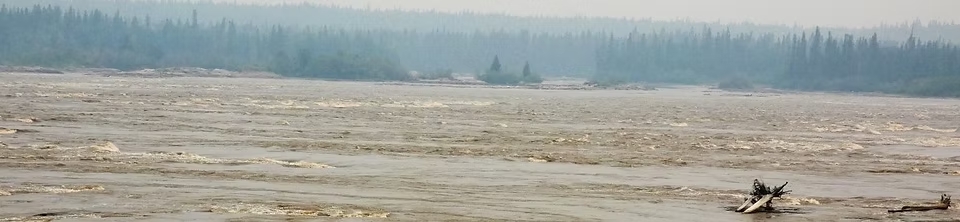
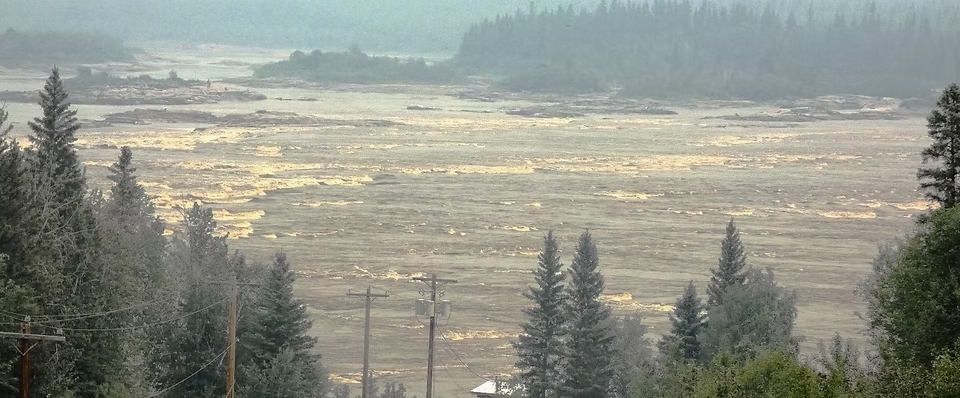
The forest fire smoke was thick in the area and, as a consequence, all our photos will reflect the haze. Also, we discovered, all the trails and side roads we wanted to go down were blocked off as they hadn’t done the rehab work after last year’s fires. So we did not see everything we wanted…like the Salt Plains. We got down one road, pulling the trailer, and about 2km later, the road was blocked. NICE! We had a bitch of a time turning the truck and trailer around. The road could have been blocked at the highway, but no.
The wildlife was interesting. So here’s the story.. He sees me taking a photo so he sticks his tongue out at me, then he feels bad so he decides to pick me a flower, he gives it the once over smell and decides he’s eating it and I don’t get it, but wait ..there’s more.. he decides to give me a great photo op instead and then runs away bravely. lol
INSERT BEAR PICS
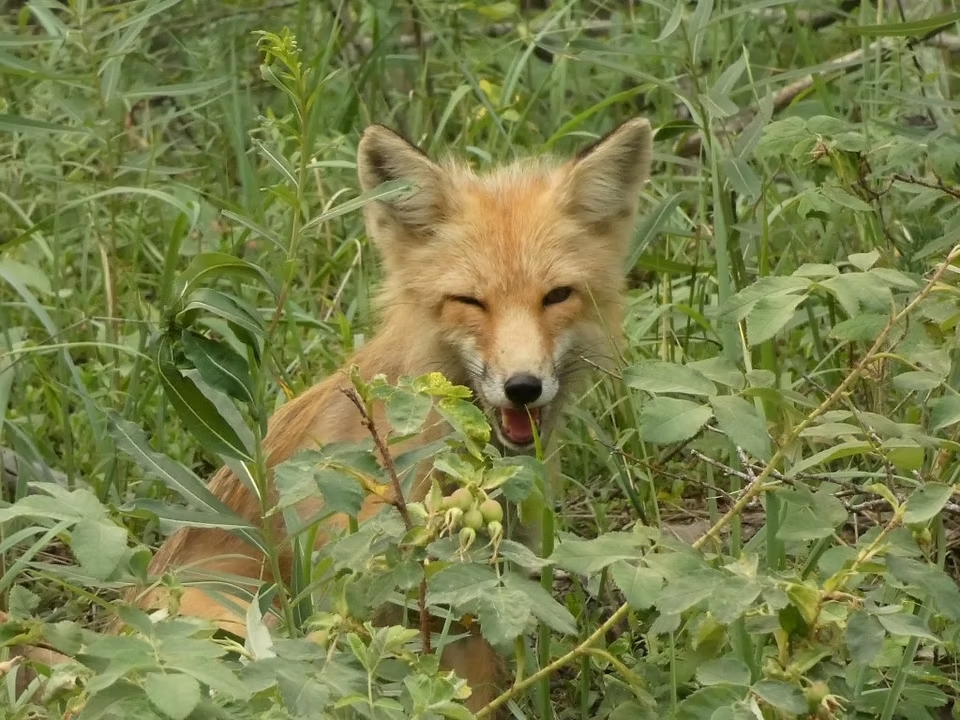
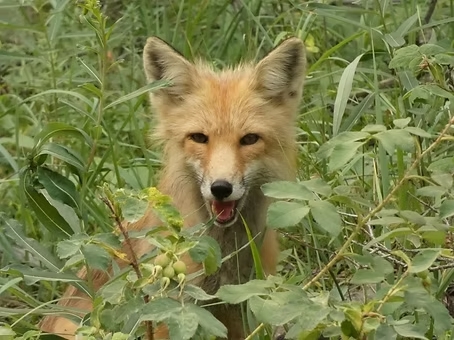
This fox, on the other hand, trots across the road, and runs 2 feet into the brush beside the truck, and I get to take several photos but will only post a few. He was so cute! Look, he’s winking at me ..crazy as a fox.
And then there was a Cow & calf moose. They were running down the road toward us, so the photo was taken through the windshield. So along with the smoke it is not a great photo. The Cow was covered in flies. Steve thinks she had been wounded and now the flies were on her. Not a healthy situation.

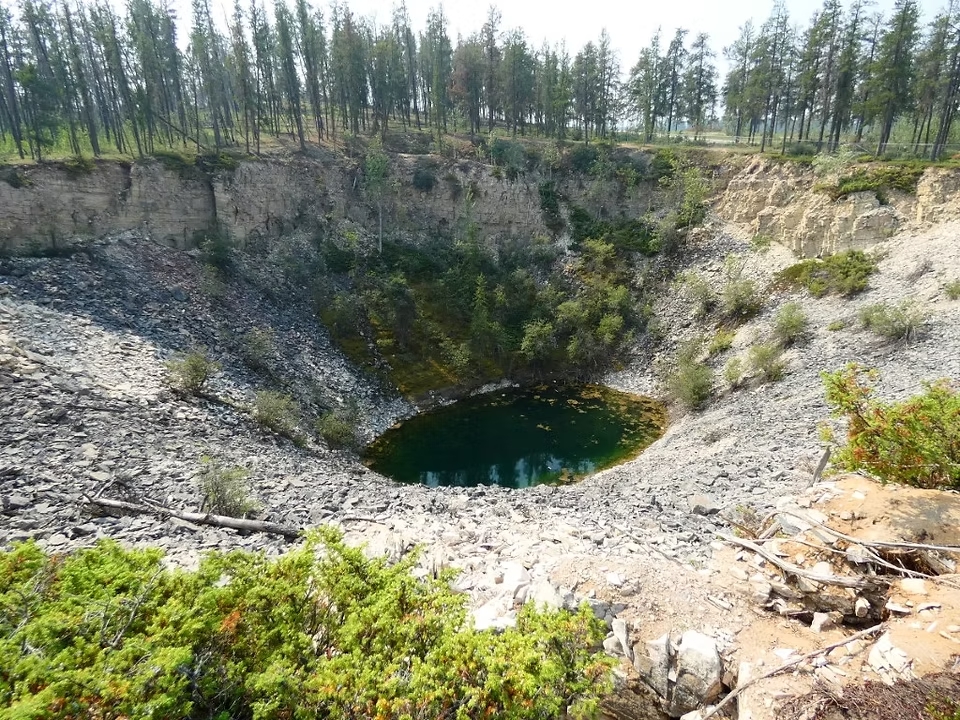
This sinkhole is evidence of the unique Karst topography of this area. Karst is a type of landscape where the dissolving of the bedrock has created sinkholes, sinking streams, caves, springs, and other characteristic features. Karst is associated with soluble rock types such as limestone, marble, and gypsum.

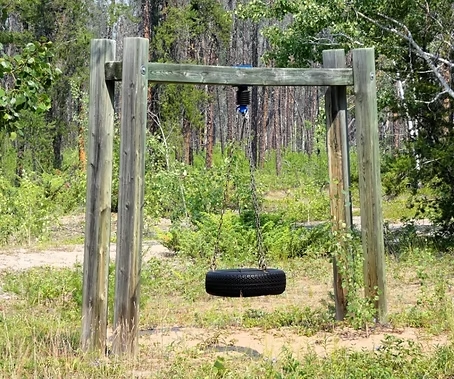
Look! A real swing that hasn’t been outlawed by helicopter parents.
We stayed at this campground. It could have been a lot cleaner than it was. Throughout the NWT, we stayed at the Territorial Campgrounds. Most were great, like Hay River, but the National Park is not so good. We think the fault lies with the contractors, who did not teach their staff about cleanliness and/or common sense.
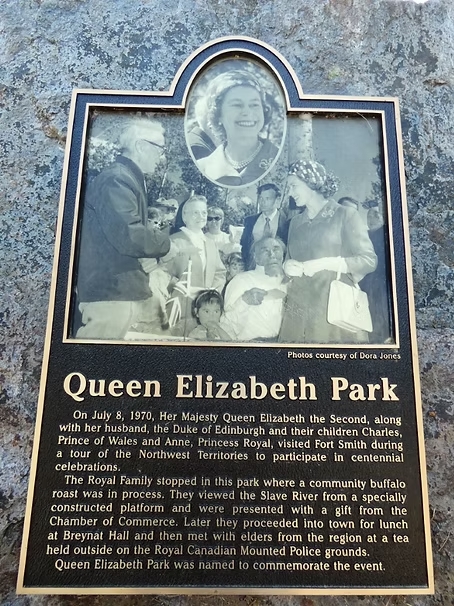
On July 8,1970 Queen Elizabeth and her family visited Fort Smith. Amazing. They stopped at this park where a buffalo roast was in process. They must have been impressed, and we don’t know if they had a taste, but they did have a spot of tea.
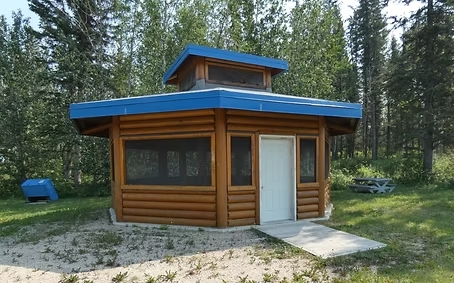
All Territorial Parks throughout NWT have these great outdoor Gathering Kitchens. They have screened windows to keep the bugs out, a stove or other cooking device, tables, and chairs/benches. I think BC could learn a lot about implementing some of these practical ideas.
We almost went golfing. Well, we tried, but the course was closed. That’s where we saw the fox crossing the road. It looked pretty rough. The golf course, not the fox. The greens are artificial turf..er..’carpet’ on a bed of sand. The ‘pull cart’ was pretty interesting, though.


The Fort Smith museum, which is inside the Parks Canada office, was interesting. We asked about the recent wildfires at the ‘Visitor Information’ desk and the response was “look it up on your computer”. I asked another question, and the kid was a few feet away with a very soft voice, so I asked if he could come over to us and talk. He was annoyed at being asked to do his job, so I told him to forget it. Despite that, I took a few photos. These were Parks Canada employees, and they were WAY down the food chain from the Territorial and Municipal employees at their respective information centers, who were uniformly excellent.
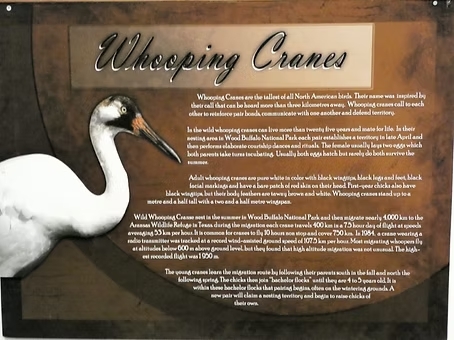
Whooping Cranes live and breed here! The printing is a bit blurry, but it should enlarge if you click on it. They are the tallest of all North American birds. Their calls can be heard from more than three kilometers away! They can live for more than 25 years, and they mate for life. They usually hatch 2 eggs, but only 1 survives. Rumor has it that the runty one gets booted out of the nest. They nest here but migrate four thousand kilometers to Arkansas and Texas.
INSERT IMAGE?
This is an interesting read if you click on it. From the fall of 1942 to the spring of 1943, 2000 soldiers built more transportation facilities than in the entire history of the north. The Uranium used in the first atomic bombs came from here, and traces of radiation from that can still be found today.

This describes the difference between the day schools and residential schools according to the Anglican and Roman Catholic churches and why the ‘day’ schools didn’t work for the kids. It’s more like they didn’t work for the churches. pfft

A typical scene. I love the skidoo because that’s pretty much what the one I first rode on.
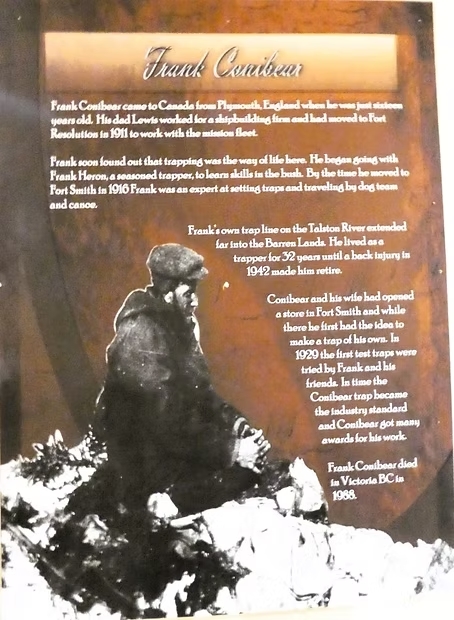
We could not find the famous Conibear trap in the museum. But this trap is still used today.

This beadwork is all made with quills .. truly amazing.
Here are a few other photos from around town:
INSERT FORT SMITH SIGHTS
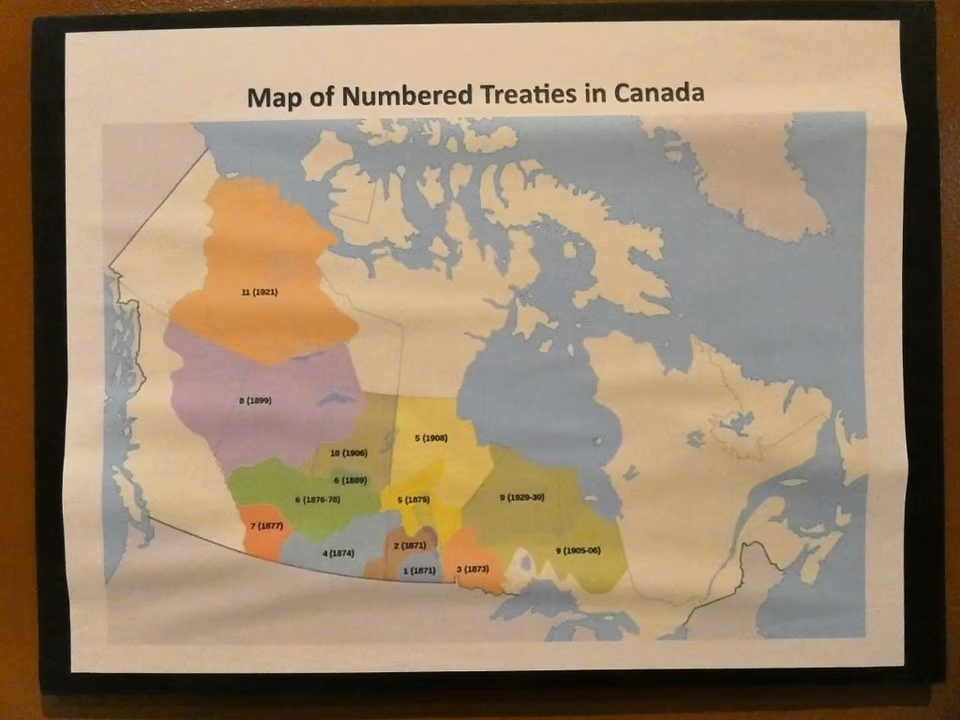
These are the original treaties signed by Canada and First Nations. Not all the Treaties are the same. Notice BC had no treaties until quite recently.
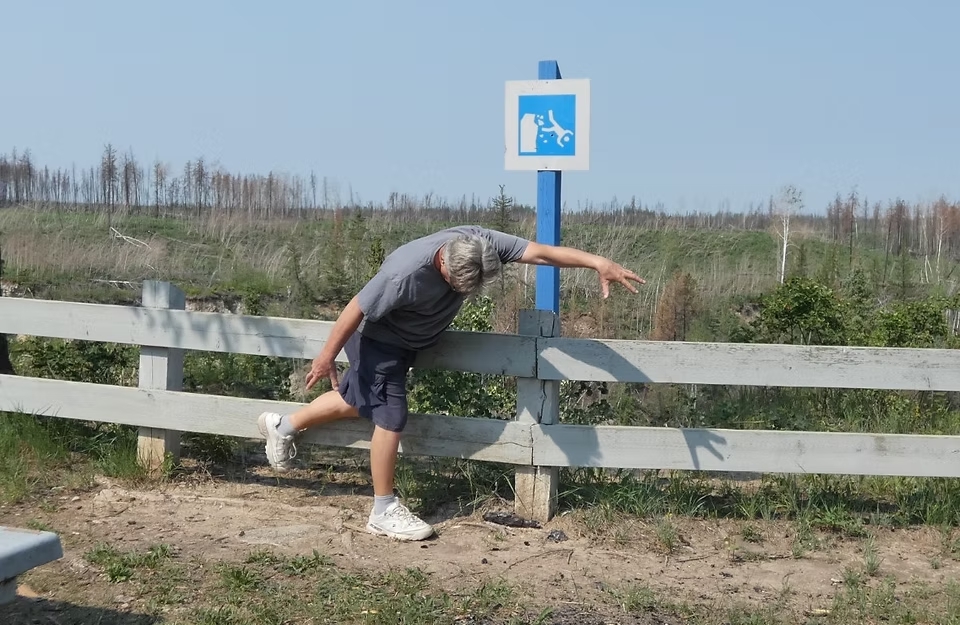
Little Buffalo River Falls. Steve is demonstrating what not to do just in case I didn’t understand the sign.
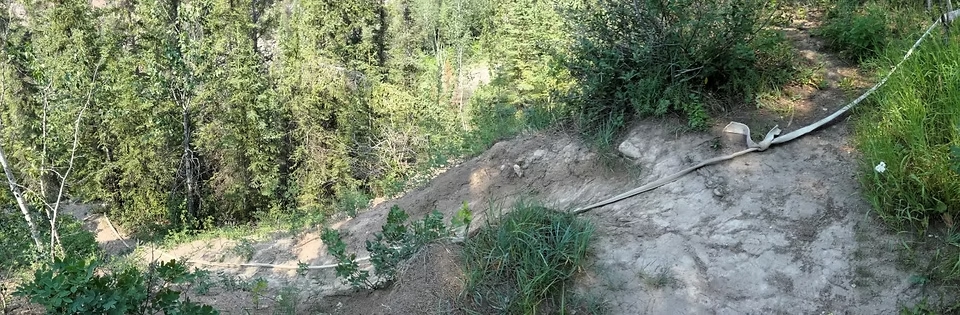
This is the ‘rope tow’ down to your favourite fishing hole.

The falls. All of the falls this year are not that impressive, because the lack of rainfall has resulted in very low water. Bummer, but they are still very cool.
INSERT RAVEN NESTS
These are Raven nests, Not Eagle or Osprey

This area is fire-prone and almost all fires are caused by lightning. They aren’t trying to ‘save’ the park from fire, and not every fire is suppressed. Wildfires are a natural part of the Boreal forest. But they still need to know where they are, so they can decide!
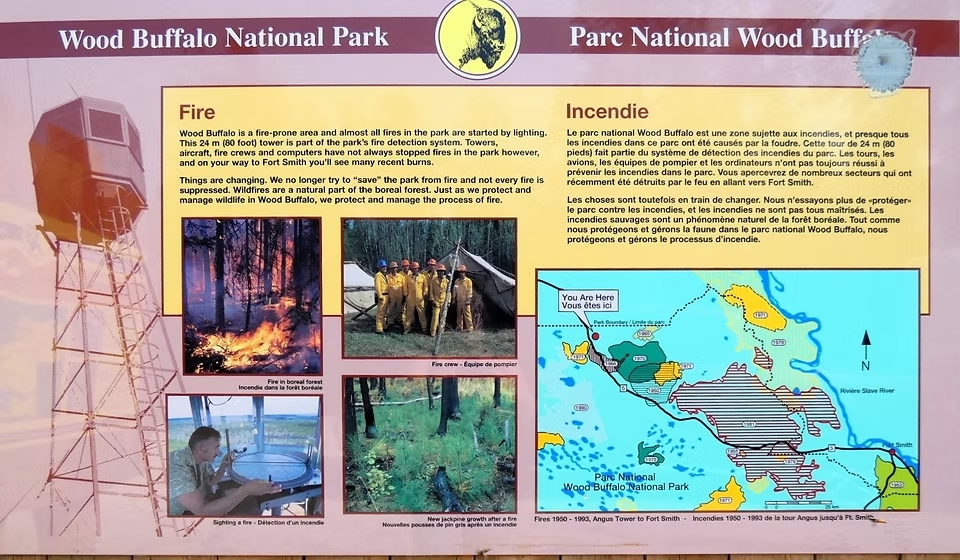
Most people think all fires are destructive, but they play a crucial role in keeping ecosystems healthy. The boreal region’s cold climate slows the decay of logs, leaves, and other organic matter on the forest floor. Fire reduces this material to mineral-rich ash, releasing and recycling nutrients into the soil, which encourages the soil’s microbial activity and plant regrowth. In 2023 several fires burned within Wood Buffalo National Park.. approximately 20% of the park.
Here are some facts that pertain to all forest fires:
- After a fire, the mineral content from the ash improves the soil, which promotes new growth and creates new habitats for animals.
- Within a matter of weeks, new vegetation is sprouting.
- Some species like Jack Pine rely on fire to open their cones to reproduce.
- Long term, fire increases food sources for berries, mushrooms and other food sources for various animals and people.
- Fireweed is a sign of a recent fire. Because the soil is mineral-rich from the ash, the fireweed moves in. When the fireweed dies, it is so rich in Phosphorus, it leaves the soil rich in minerals and Phosphorus.. which encourages many plants to grow. Sometimes Moose will move back in, berry bushes become plentiful, and other animals return, increasing their species. Lots of benefits.
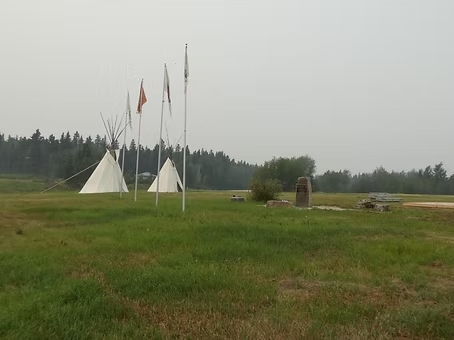
This community is actually in Alberta, but it is still considered part and parcel of Fort Smith. The smallest and northernmost Alberta community in the region, Fort Fitzgerald is located on the Slave River, just south of the Alberta/NWT border. It received its name in honor of Francis Joseph Fitzgerald, an inspector with the Northwest Mounted Police. Population 80.
INSERT CONTRAPTIONS (CAREFULLY)
I am not sure what these contraptions are for but I thought they were pretty interesting. I suspect they are for cleaning fish/storing fish. If I ever find out, I will correct myself.
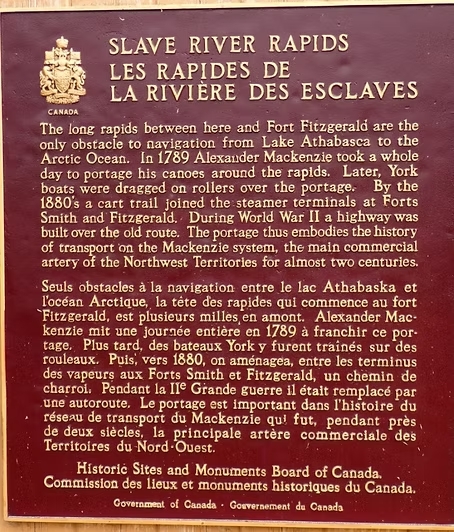
Information on the rapids having to be portaged and the different stages portaging went through. These rapids are not to be fooled with as they are world-class and you best know what the heck you are doing.