March 3, 2015 – Hue.
The bus ride from Da Nang to Hue is only two hours, and we averaged fifty kilometers per hour, which is pretty good for a major Vietnamese highway. Our perfectly acceptable hotel is half a kilometer from the south bank of the Perfume River, which runs through the middle of Hue. We’re going to go on a tour of the countryside, in addition to touring the Imperial City.
On our first day here we’re touring the Imperial City, and walking around the downtown adjacent to the Perfume River. The Imperial City is a bit confusing. If you bring up the city of Hue on Google Maps, you’ll see a big square thing on the north bank of the Perfume. Look closer, and you can see that it’s a moat and a wall. And another moat. And a moat going through the middle. And another moat and a wall inside that. And…. They must have had the builders on a retainer or something. But we have a guide and a map, so I’m sure we’ll be fine!
The Vietnamese government has been reluctantly persuaded that their Imperial past is something that needs to be preserved, but they’re certainly not enthusiastic about it. The original city walls are intact, complete with bastions, ravelins, and all the cool architecture that people built to keep other people from killing them. But inside that, the original Imperial City is now mostly just a city. There are a few parks and lakes, but most of it is a residential rabbit-warren. But the Palace Grounds have been preserved, and are slowly being restored (emphasis on ‘slowly’). It is truly a treasure.
(Reminder: To see images full-size, right-click on the image and select ‘open image in new tab’.)
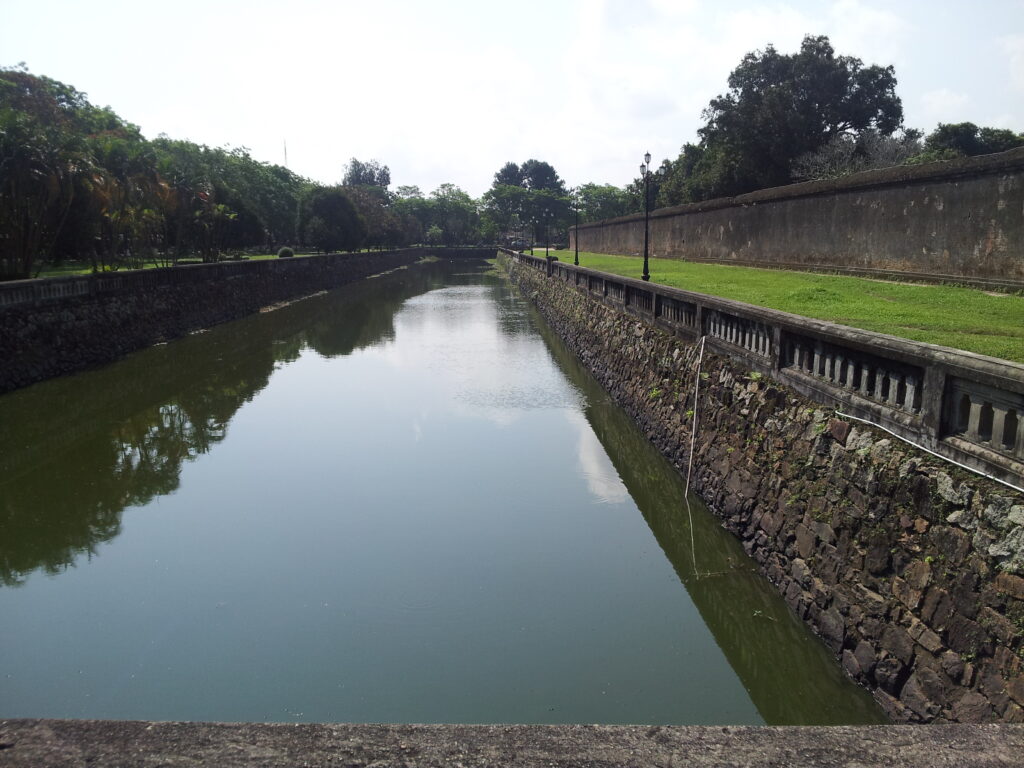
This moat surrounds the entire Imperial City.
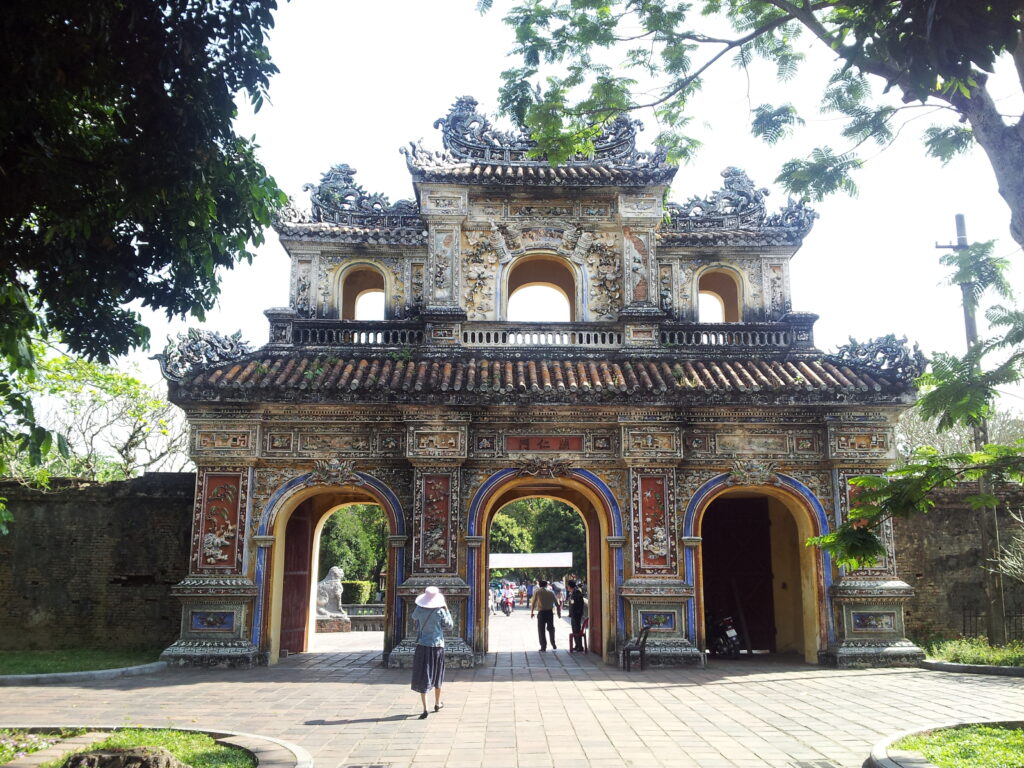
One of the numerous side doors. No doorman today.
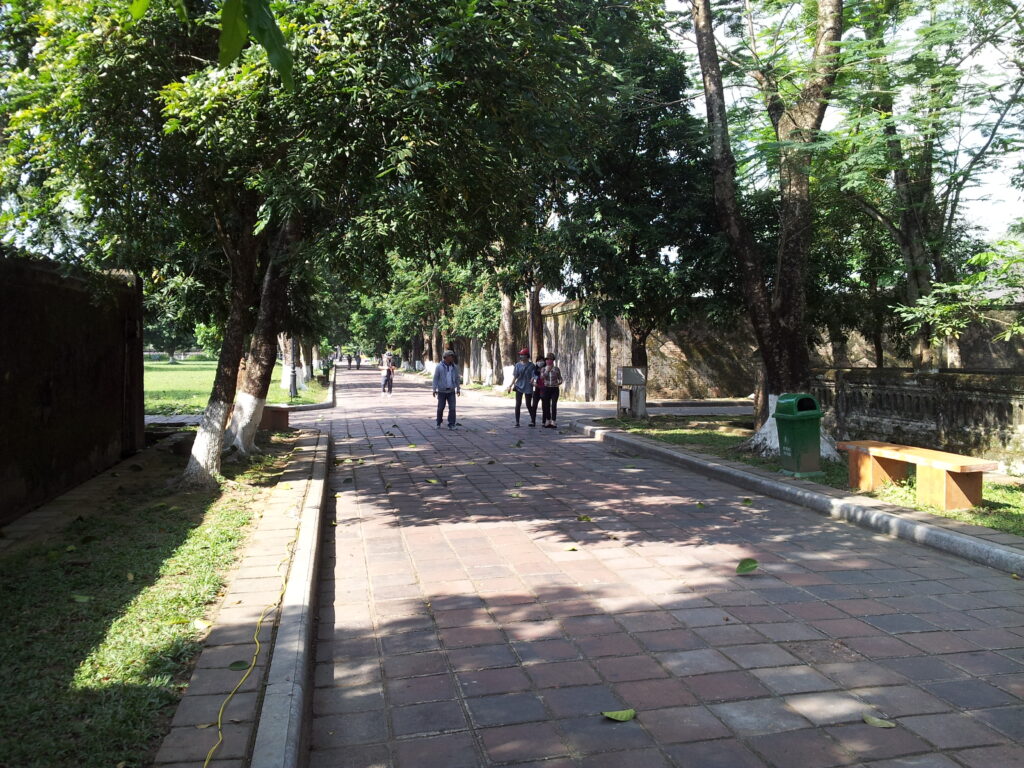
A street inside the Palace Grounds, but outside the Palace proper.
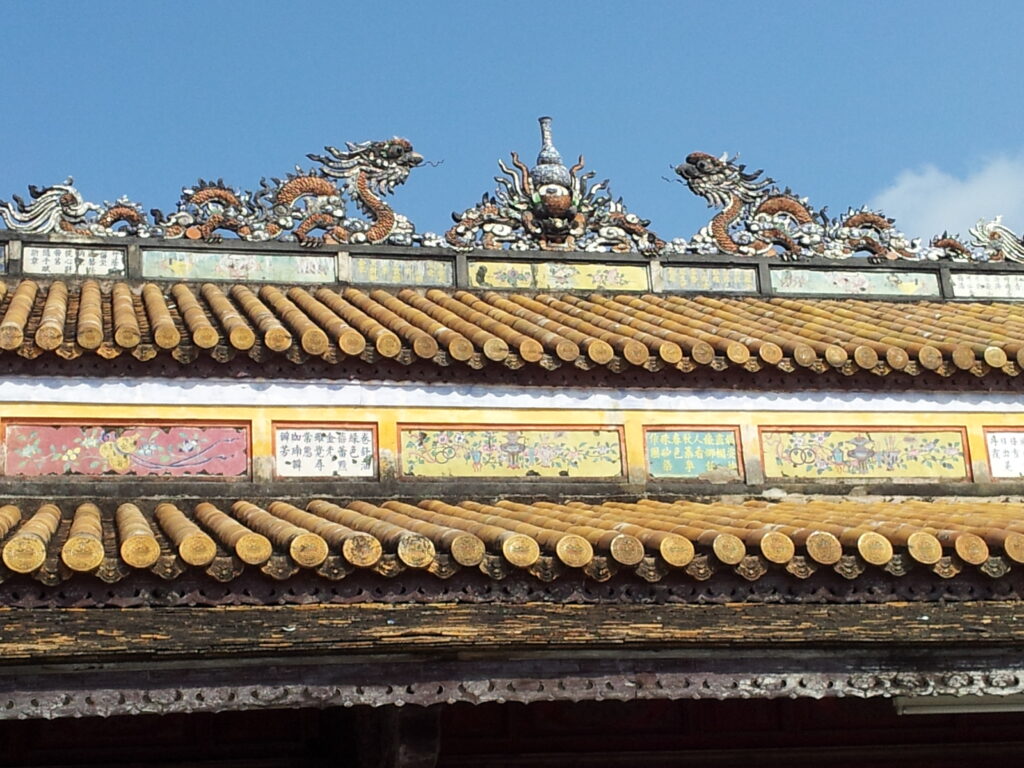
The outer wall and roofline of Thai Hoa Palace.
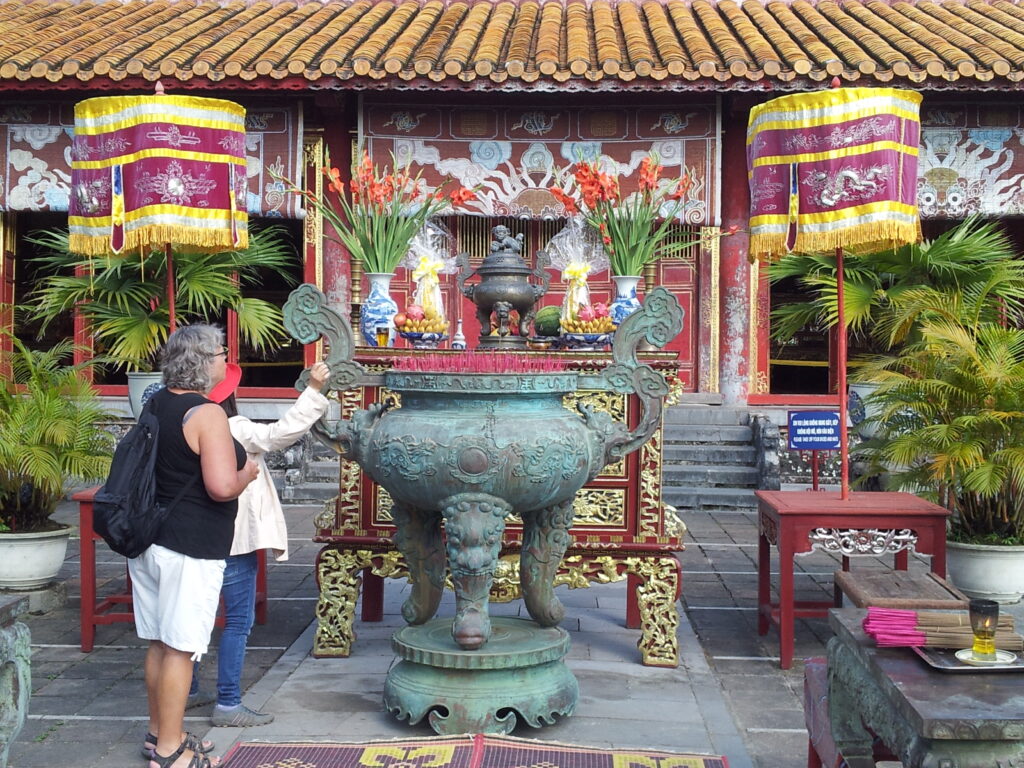
An interior courtyard within the Palace Grounds.
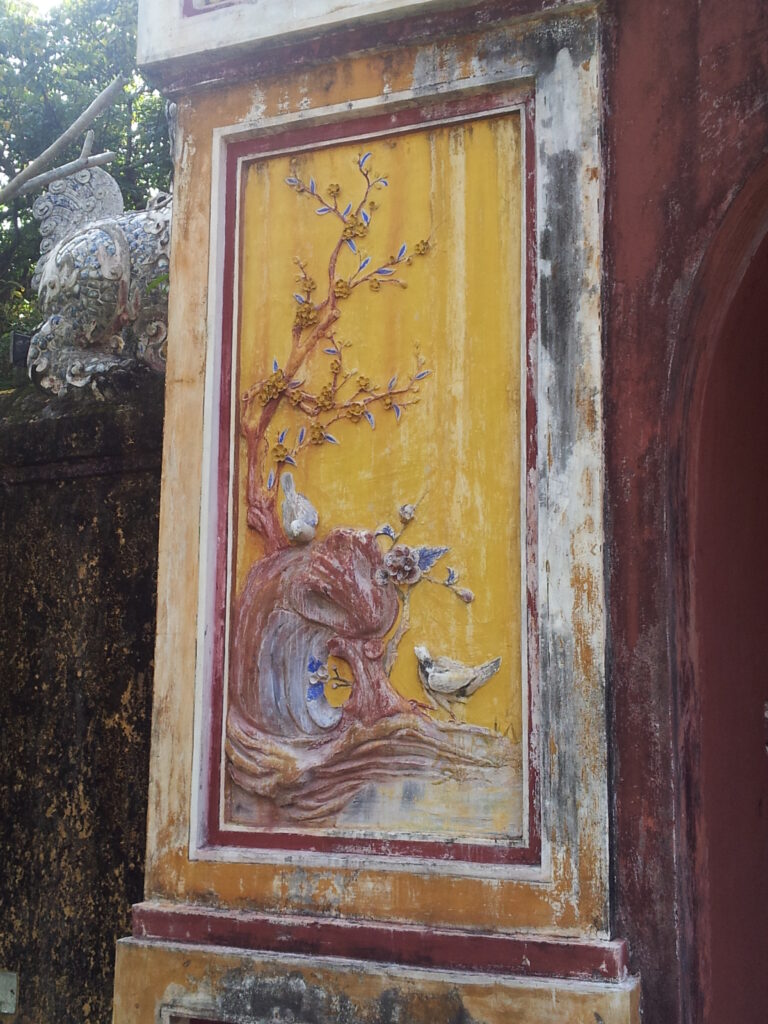
There are many, many exquisite panels like this, all badly in need of restoration.

Likewise, the statuary is in similar condition. Going downhill, but they could still be retrieved with work and money.
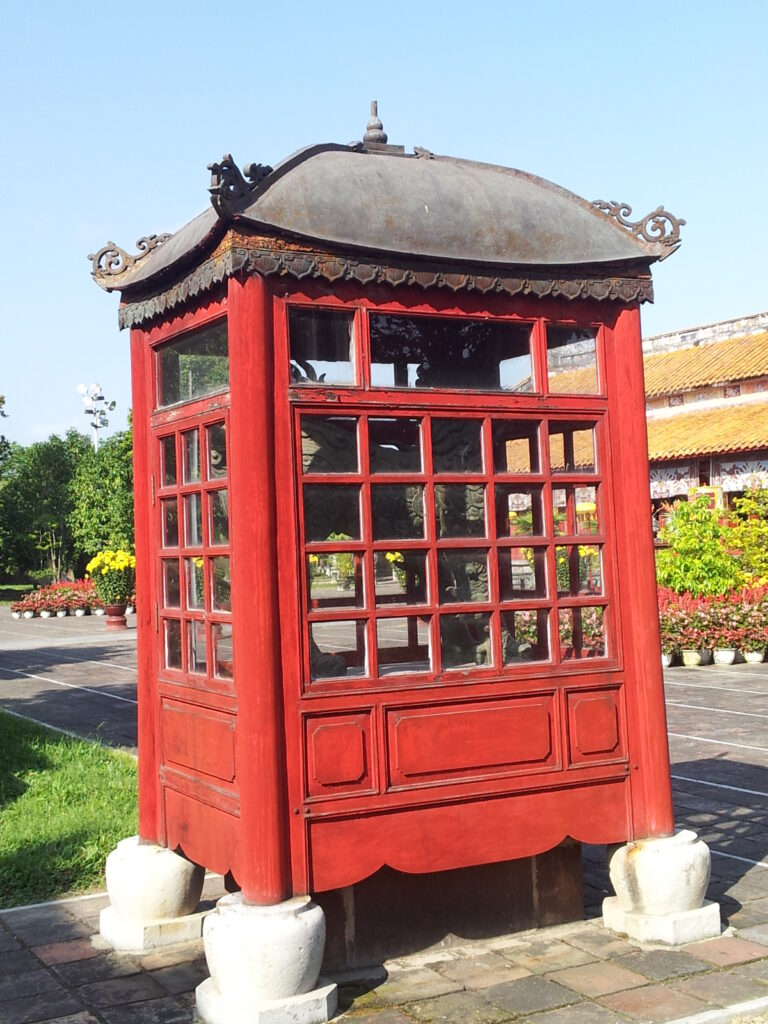
The temporary solution for some of the smaller statuary. They purchased London phone booths as they were being taken out of service, and are using them to protect the statues from the weather.
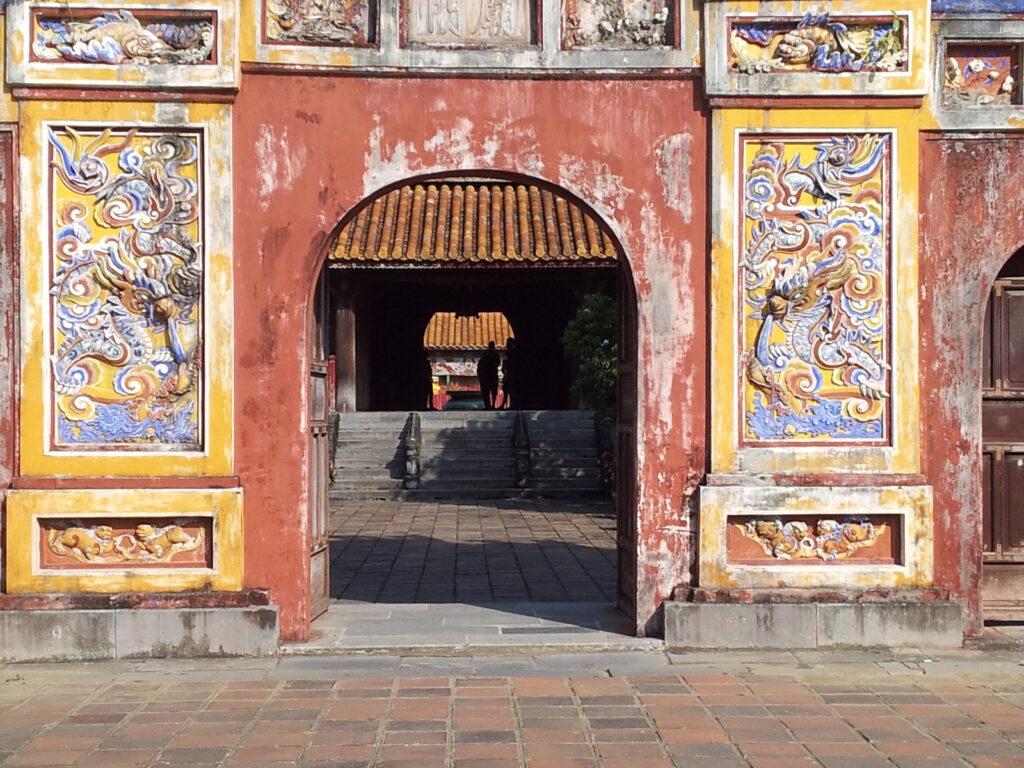
The inside of the Meridian Gate, looking out.

A wide-angle shot of the Palace from the Meridian Gate.
It’s a marvelous place to visit. It’s one of the few remaining monuments to Vietnam’s Imperial past, and it’s right in the middle of the city, and is easily accessible. I highly recommend it!
We still had time for a short river tour in the afternoon, which covered the river in and around the city. It’s a busy place.
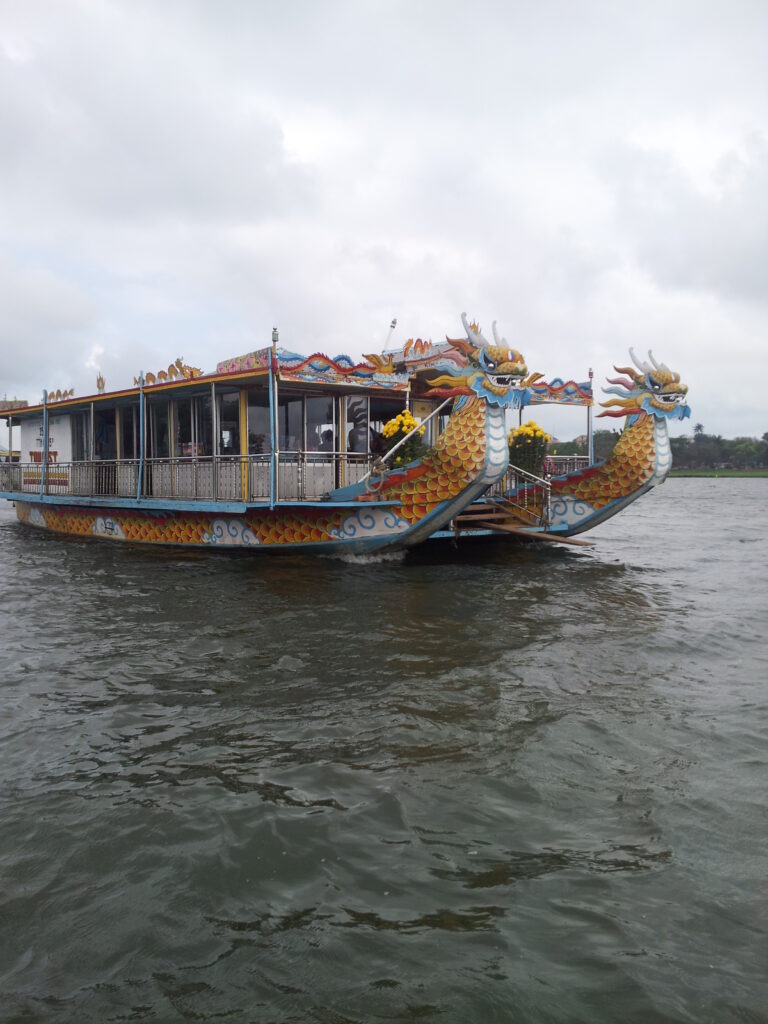
The Perfume is a busy river, with water taxis and tour boats, in addition to all manner of commercial craft.
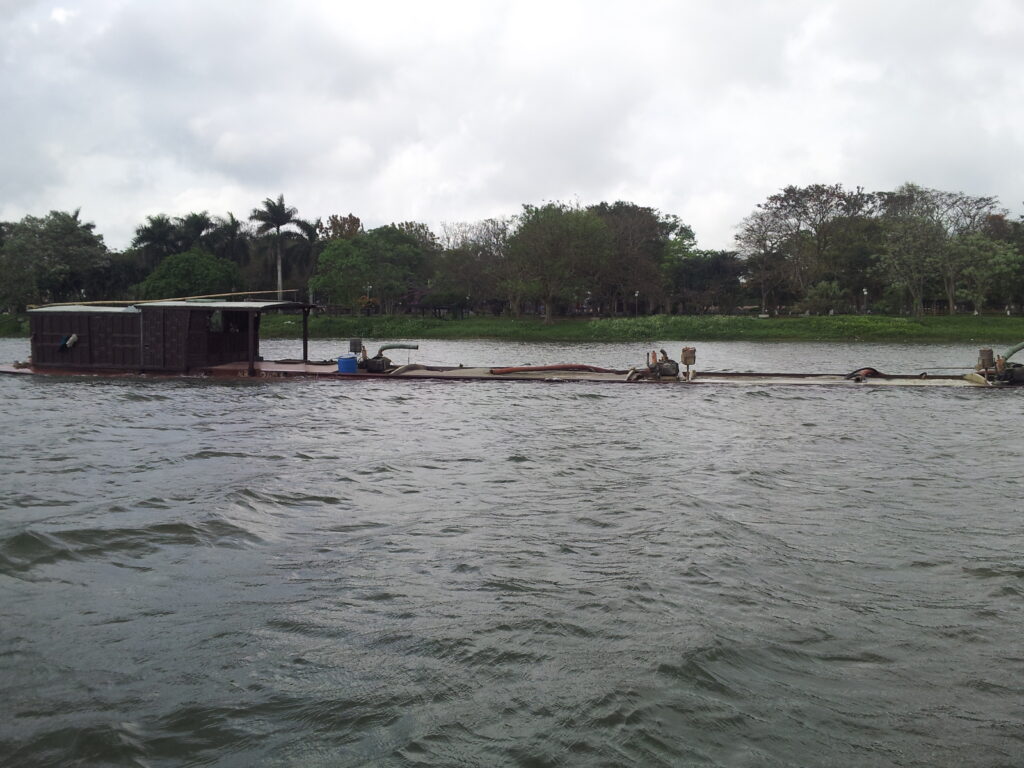
This boat is hauling gasoline. During the war, it was harder to spot and harder to sink. And it still works!

This is our official boat captain and tour guide.
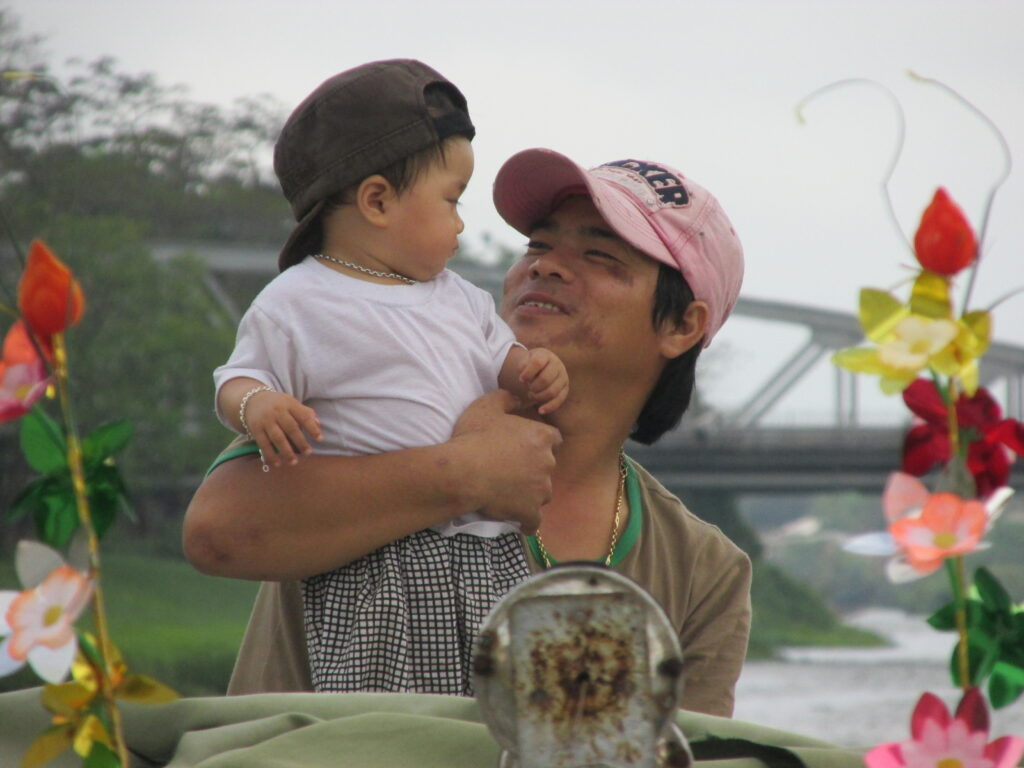
But the entire family lives on the boat, so here are captains number two and three.
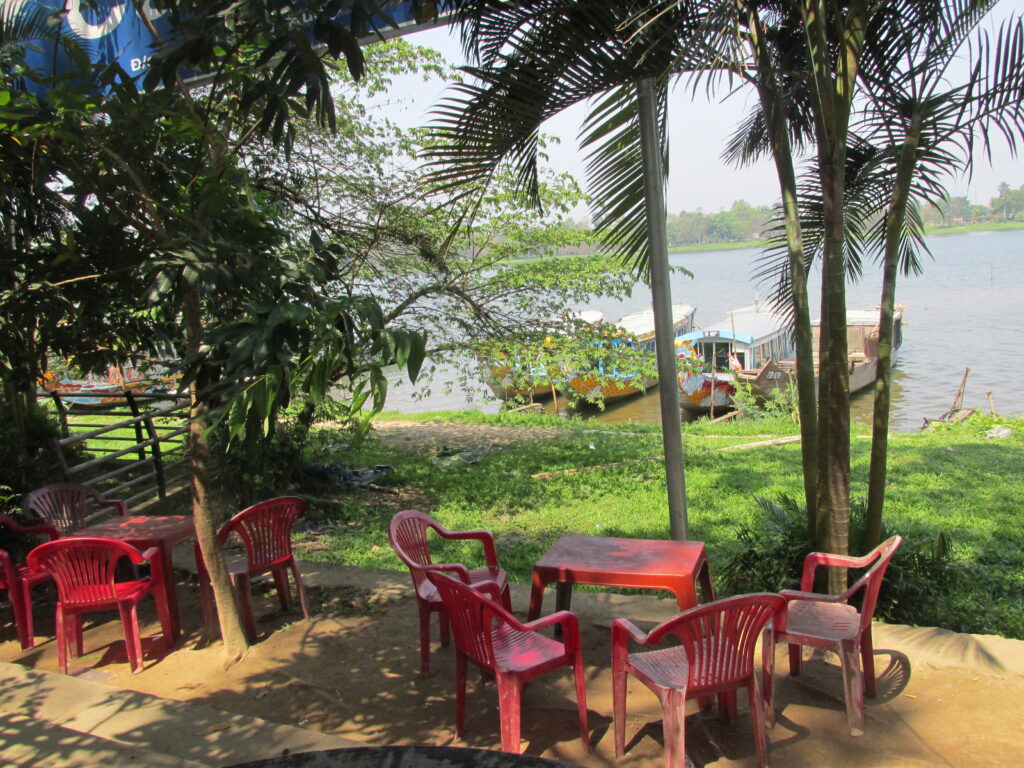
Our lunch spot along the river, with our tour/houseboat in the background.
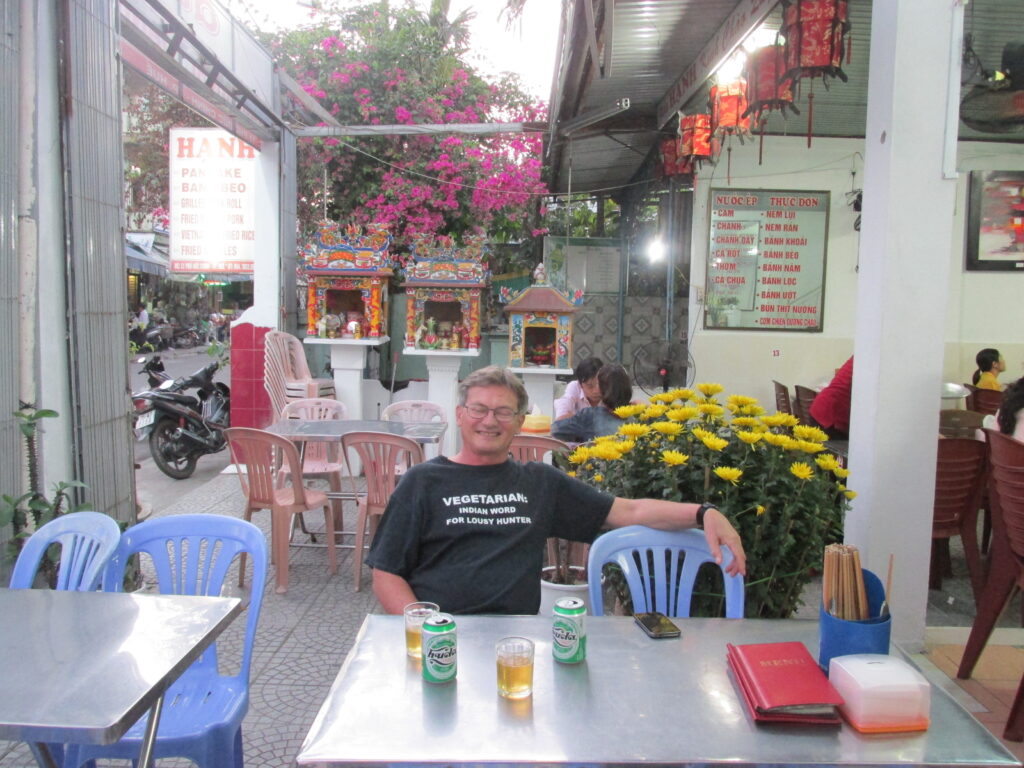
A sidewalk cafe near our hotel.
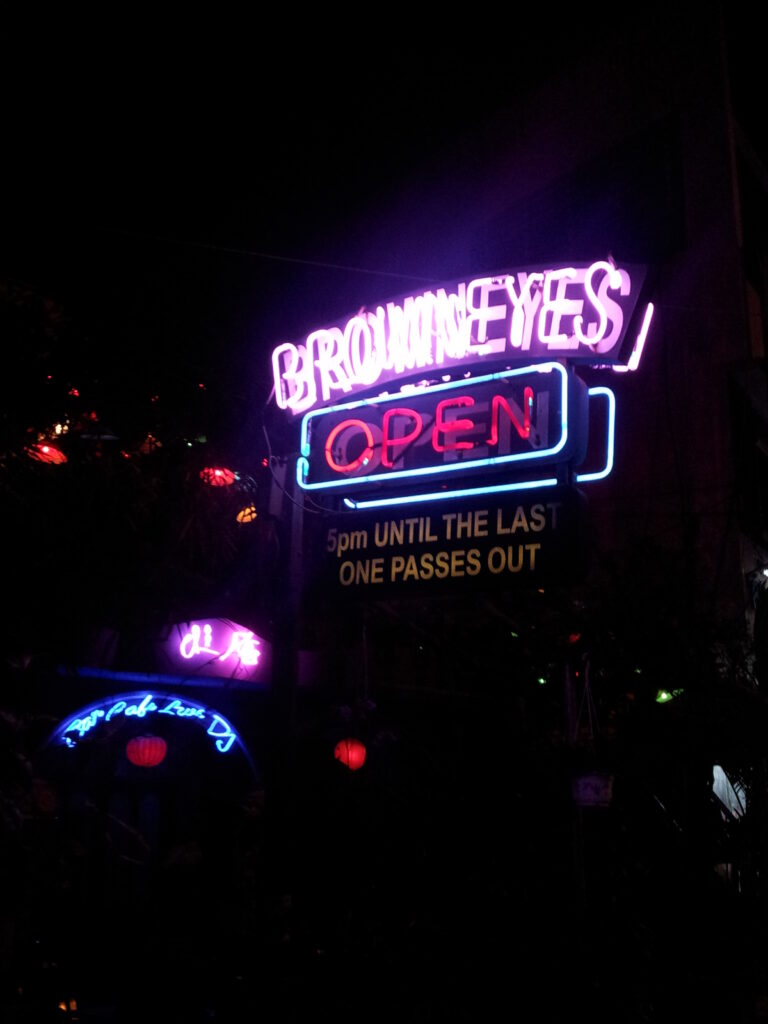
Good to know.
Our second day is dedicated to a tour of the surrounding countryside and a visit to a local orphanage. Debbie had secured donations (money) for it while back in Canada, and we were interested to see the orphanage in addition to delivering the money.

A panoramic view of the Perfume on a major bend south of Hue. I’m standing on a US Marines’ gun emplacement, which dominated the river and controlled the traffic.
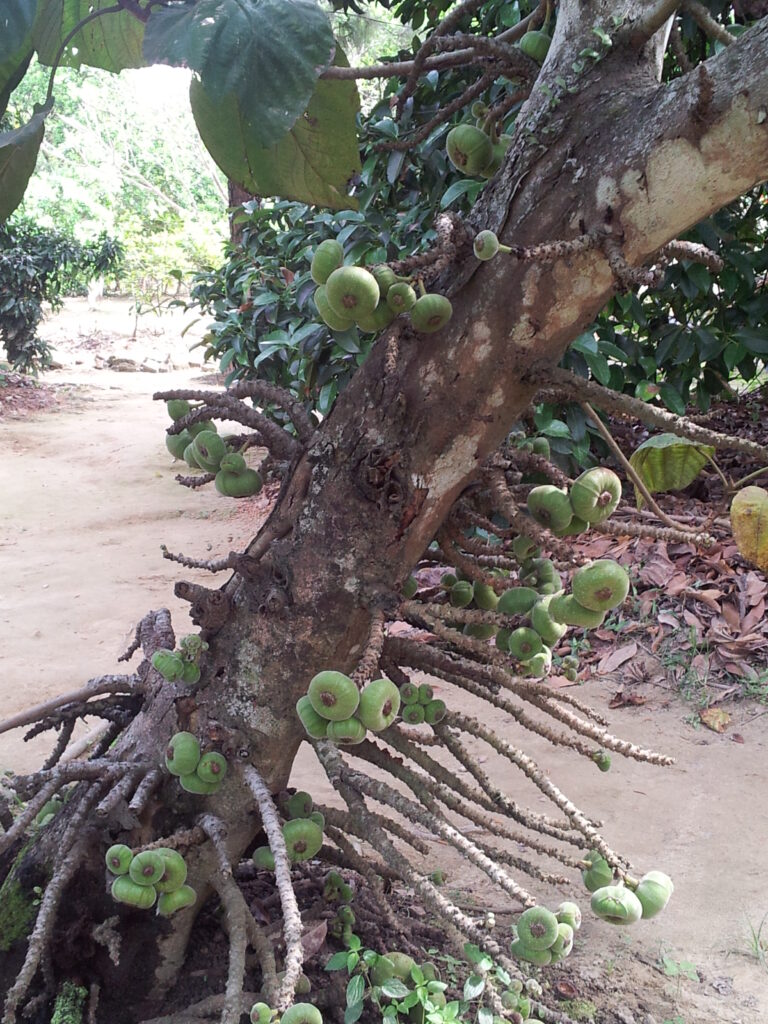
A fig tree in someone’s front yard.
Next stop along our route was an incense factory. Of course, we got to make some. And of course they worked out great!
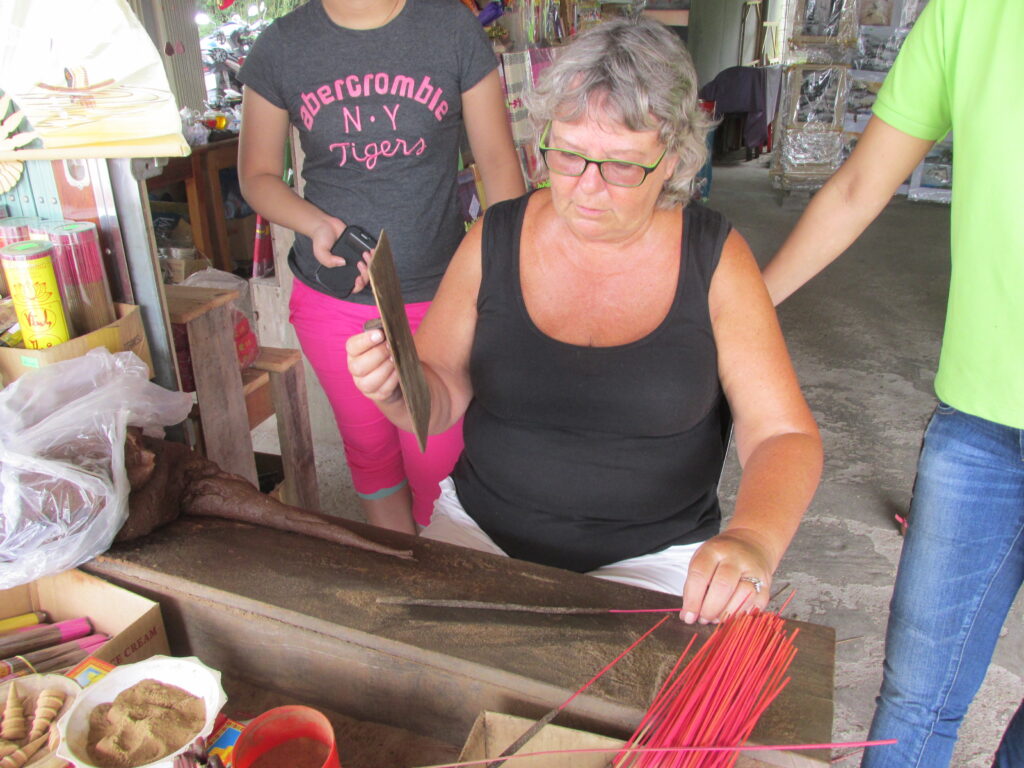
Hmm. Looks a little lumpy…
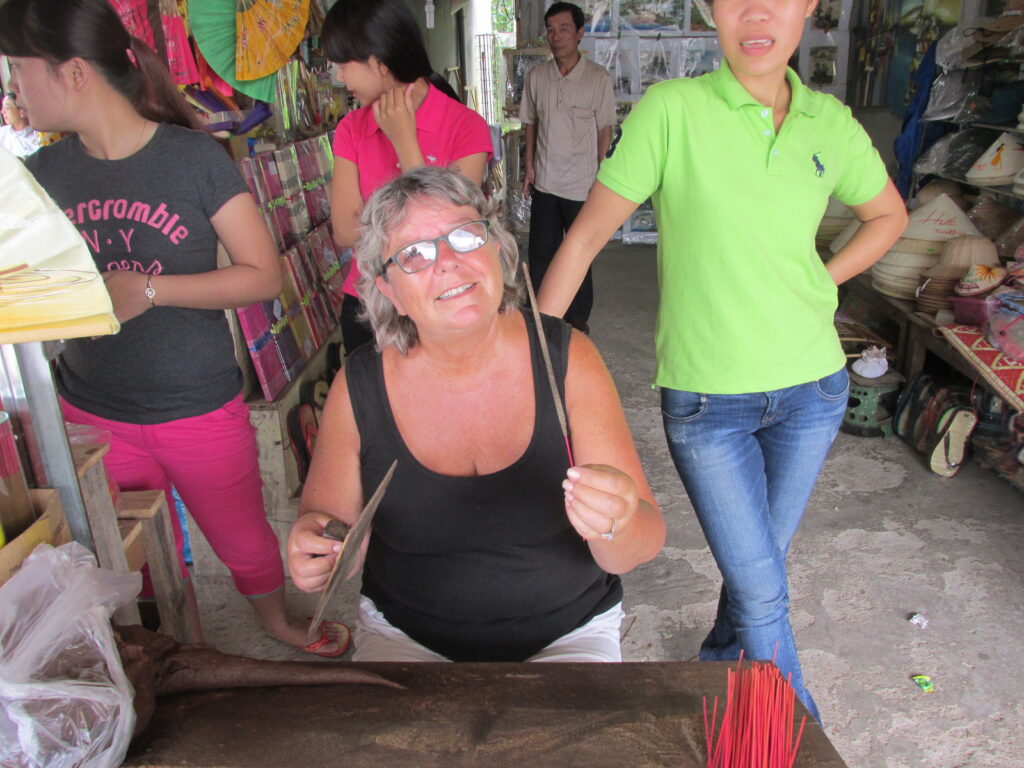
Perfect!
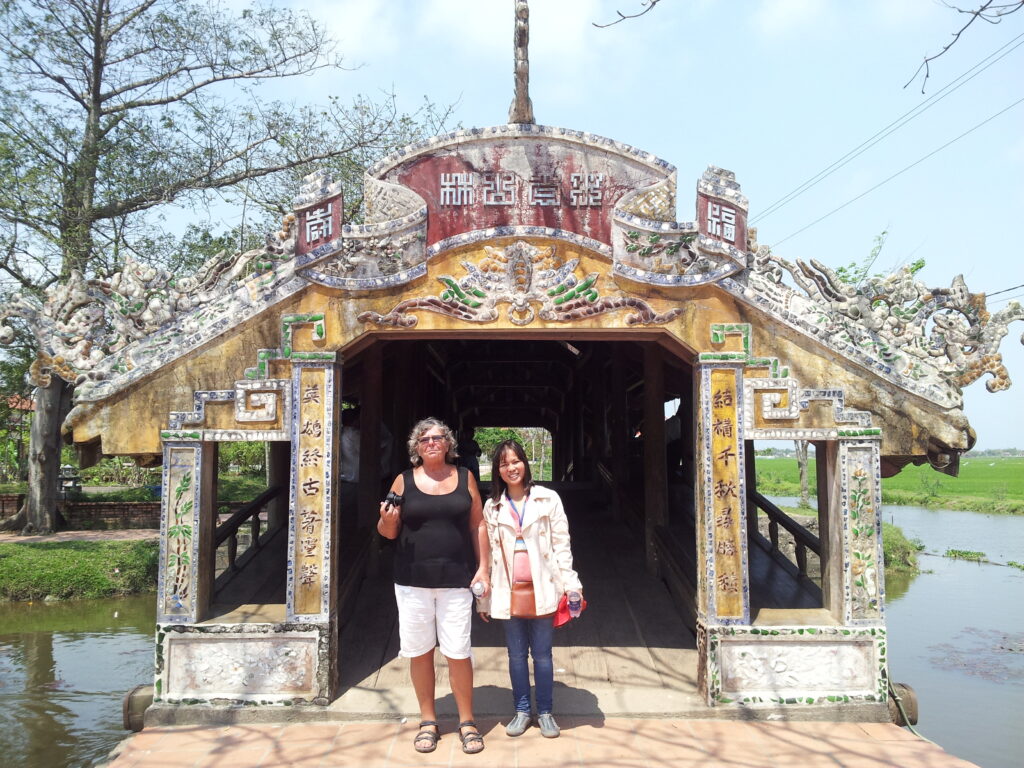
Debbie and our guide, in front of the oldest covered bridge since the last covered bridge. This was adjacent to our guide’s home village, where we stopped for lunch and visited her auntie. The older lady had a severe cleft palate, and of course ,there was no money or facilities to fix anything like that fifty years ago, so she went ahead and had a passel of kids, ran a business, and made a life.
Right beside the bridge, there was a farming museum of all things. It was just a single building, with a single old lady inside. She didn’t speak a word of English, but that didn’t slow her down a bit. She led us through the entire process of harvesting and processing rice in pantomine. It was fun.
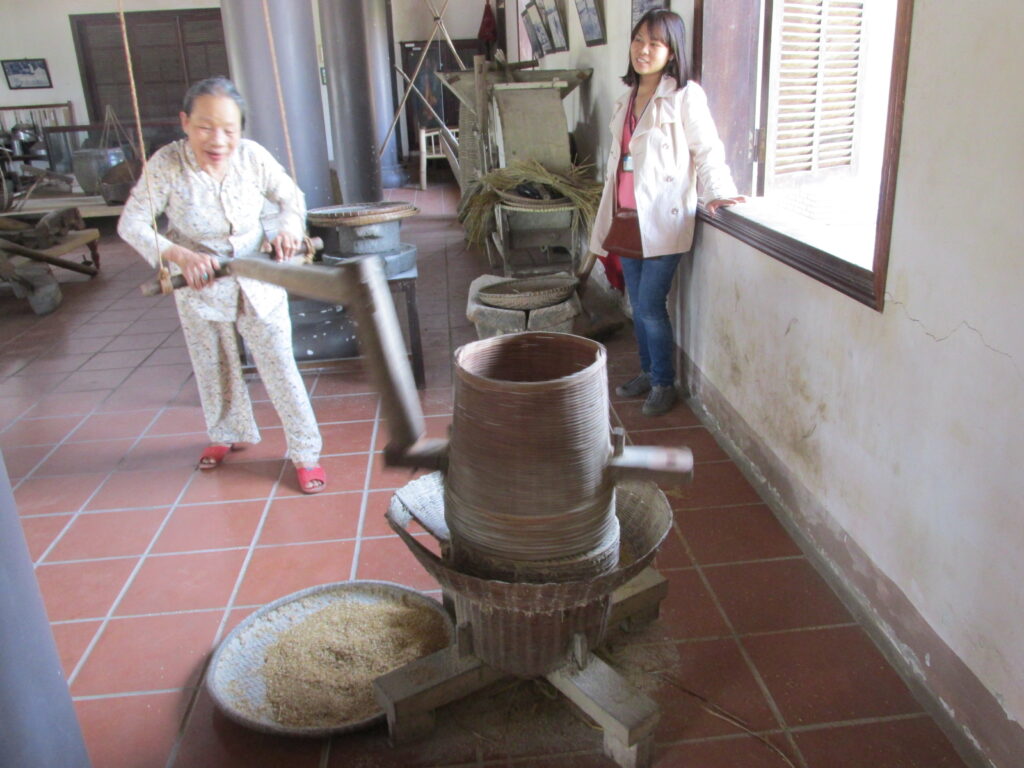
This lady loved her job, and she was good at it!
Our final visit for the day was to an orphanage that was established shortly after the conclusion of the Vietnam War. There were a LOT of orphans created in the war, and orphanages were pretty low on the priority list for a fledgling government that was busy rebuilding the place. So this lady just went ahead and did it herself. It’s called the Duc Son Orphanage.

The orphanage courtyard. There are vegetable gardens behind the courtyard, and the children learn how to farm there. They eat what they grow to the greatest extent possible.

Recent grads with their diplomas. Every child gets a high school diploma, and learns at least two trades.

Every graduate gets a glamour shot.

Lunch for the volunteers. Everything but the rice is grown on the orphanage grounds.

Today’s volunteers.

Debbie with the proprietor and some female grads.
The next morning it was time to head north to Hanoi. We had tried to secure train tickets, but they were booked until the stars burn out, apparently. And the bus was out of the question, it’s at least a twelve-hour trip. So airplane it was, and a very nice trip of less than two hours for a very reasonable price. Don’t forget to fly on the longer legs!